

Article: #04 | Somehow Communicating

#04 | Somehow Communicating
Kazuaki Koide (Designer)
My parents must have had a tough time.
When reflecting on my own views of work and society, that was the first thought that came to mind when I looked back at my childhood.
For about six or seven years, I have been entrusted with managing the WONDER BAGGAGE online store and producing all graphics and promotional materials. I recognize that I don't possess particularly outstanding skills as a designer, but I also have the confidence that perhaps no one else could have done what I did. At the root of this confidence, I believe, are my own choices and actions that created "connections."
First, the choice I made (though not consciously) was not to go to school. This meant my parents had a tough time. Over 30 years ago, truancy was not even a common term. The clear reason is still unknown to me. I vaguely remember feeling uncomfortable and unable to tolerate things like doing simple tasks in unison with others. Perhaps I was moderately skilled. I could handle calculations and sports where my peers and elders struggled. Of course, I should have realized that keeping in step with others was a common skill, but I might have had the foolish misconception that I was special.
I didn't go to elementary school for a single month out of six years. Still, I played with friends after school, so it didn't turn into a truancy-equals-hikikomori situation. However, just before starting junior high, my parents were transferred to Hokkaido due to work. The severing of friendships led to an "upgrade" to being a hikikomori. That said, I didn't feel gloomy. Because our families were close, a computer was introduced into our home to help me contact friends, and something called email (PostPet) was set up. My body was withdrawn, but my mind was very open.
Being a hikikomori and computers are a great match. From the year the internet began, I talked to a diverse range of people—truly all ages and genders—through chats and online games. However, it was the internet of that era, completely different from today, so in a sense, it was a limited group of people, and perhaps not truly "diverse."
Among them, I was greatly influenced by someone named "Kaazu" from Kansai, with whom I often chatted. One day, he recommended a novel to me. I understood movies and manga because my sister read and watched them, but novels were a culture absent from our home, so I was intrigued. The title was good too.
It was "The Ailment Which Leads to Murder."
Those who know it recognize it as a masterpiece of mystery. At the same time, recommending it to a 13 or 14-year-old child might invite criticism about the internet back then, but it was a shocking experience, like being punched in the head. This foreign object, which entered my world when I thought creations were limited to shonen/shojo manga and prime-time movies, captivated my heart. From there, my interest expanded, leading me down the path of consuming various novels, underground films, manga, and so-called subcultures.
What simmered within me during that time was the presence of "a self that can somehow manage."
The choice to try writing a novel came when I was 14.
Am I different from others? This lingering, almost mistaken feeling, blended well (or poorly) with adolescence, and aiming to be a creator became almost inevitable. On the other hand, I created a website with friends I met through online games and published a kind of diary. It was an extension of play, but it lowered the barrier to writing. I started publishing my drafts on my own site, and as novel submission sites began to appear, I started submitting there.
And the fact that I quickly received recognition, like winning an award on one of those submission sites or having something published in a magazine (albeit on a CD-ROM) that I had released on my own site, in hindsight, felt both "good" and "bad." It was a major factor in my decision not to go to high school and to pursue a career as a writer.
The biggest turning point came when I was 18. By then, I had started submitting novels to magazine awards, and I made it to the "final selection." I was among the last seven candidates for the "All Yomimono Mystery Fiction Newcomer Award," an award that has produced authors like Miyuki Miyabe and Ira Ishida.
While I should have been overjoyed, what remains in my memory is more of a stunned feeling. This is because I "had confidence" in the submitted work. Around that time, I started keeping a dog. And in my excessive efforts to properly train the dog, I became somewhat overwhelmed, like suffering from child-rearing neurosis. I poured that experience into my work. A work based on real experience, not the "imagination" of my previous writings, made it to the final selection.
I questioned myself: If I, a hikikomori, were to win, could I write something similar again? When I asked myself this, I felt nothing but a bone-chilling dread.
After gracefully failing to win, I made a new choice: to pursue further education.
My parents must have had a tough time.
Driven by the urge that I simply had to act, I declared that I would "share a room in Tokyo with someone I met through an online game." This was over 20 years ago, before smartphones even existed. I attended a correspondence school, worked part-time, and shared a room. Life was chaotic. I was desperate, believing that to create work, I needed action and experience.
Whenever an opportunity arose, I would meet people, talk, drink, lose my memory, or force myself to experience things I hadn't done before. Drunkenly, while waiting shivering for the first train at Shinjuku Station, I felt a strange comfort, thinking it was like a passage from an unprincipled autobiographical novel. However, the feeling that my interests and hobbies expanded the more I met people wasn't bad. While there wasn't the same shock as when I encountered novels, various bodily experiences allowed me to understand, "This is pleasant" and "This is not good." My social circle and the people I met gradually became more selective, and I felt I could perceive myself relatively, like looking in a mirror.
I wondered, "So this is the kind of person I was?"
At the same time, it helped me imagine the motivations behind other people's actions. While complete understanding is impossible, both the people I wanted to meet and those I no longer wanted to meet had their own motivations, and behind them lay context. I understood viscerally that sometimes this context is rooted in society, and sometimes in a small community, and there are things that cannot be understood without standing on that foundation.
Through the accumulation of such small insights, the fictional characters in novels seemed to emerge three-dimensionally, which was also enjoyable.
In those chaotic daily lives, while I forgot about writing novels, I still loved and read books frequently. Once a week, I would go to a bookstore, pick up books that caught my eye, and buy them if I could afford it.
After one or two years, while discussing my career path with my homeroom teacher at the correspondence school, I learned about "jobs that make books." And apparently, that was part of "design work." It was obvious, but I hadn't realized it. Books simply existed there, and for some reason, I never thought that someone designed them.
The more I studied design, the more I understood "the reasons why I was interested" in "the books that caught my eye," and I learned to control the underlying context. I was moved, recalling the books I had bought in the past, wondering if the output based on cultural understanding was a form of communication based on unspoken agreement.
I had always been communicating. Even while being a hikikomori, I connected with society, repeatedly communicating through people, things, and play.
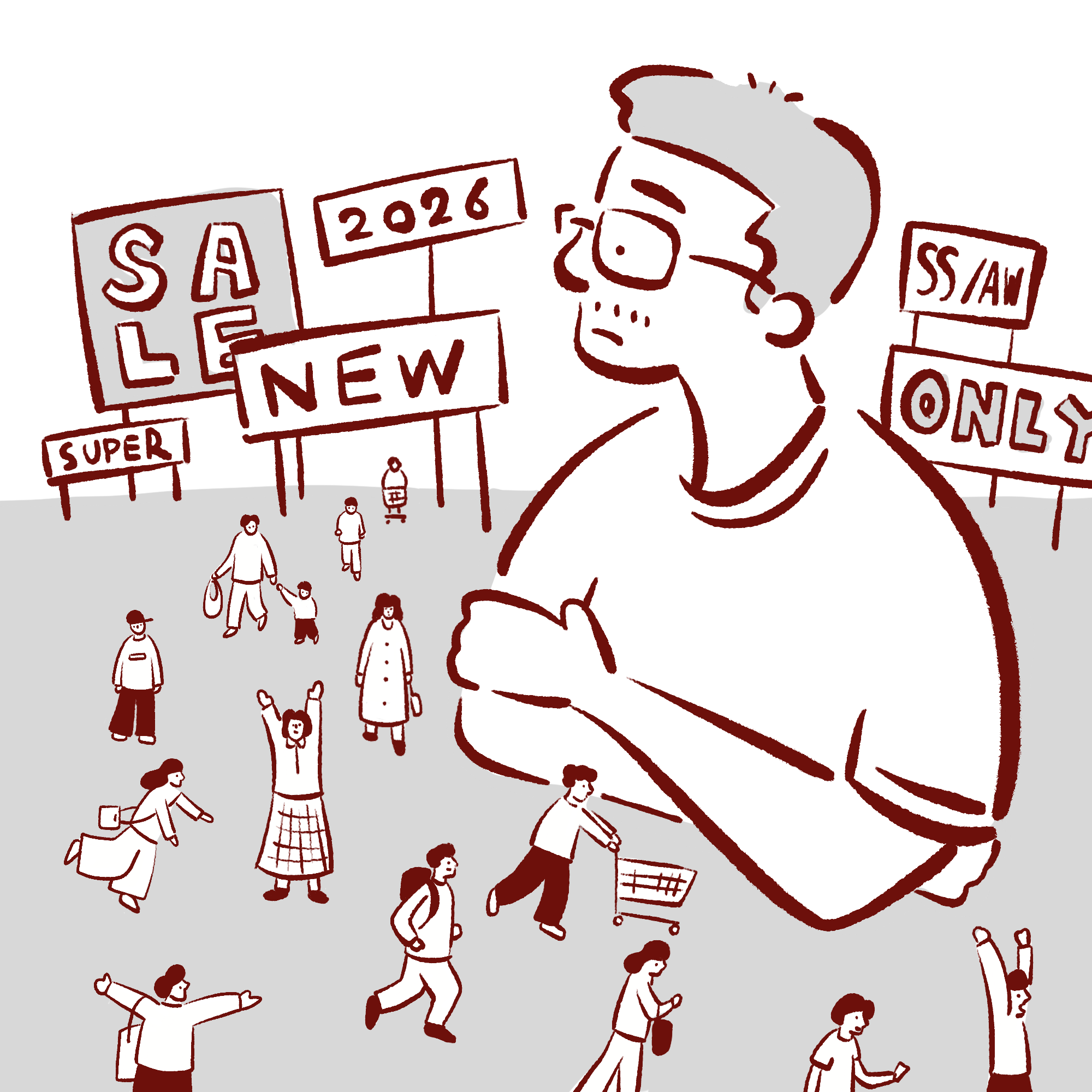
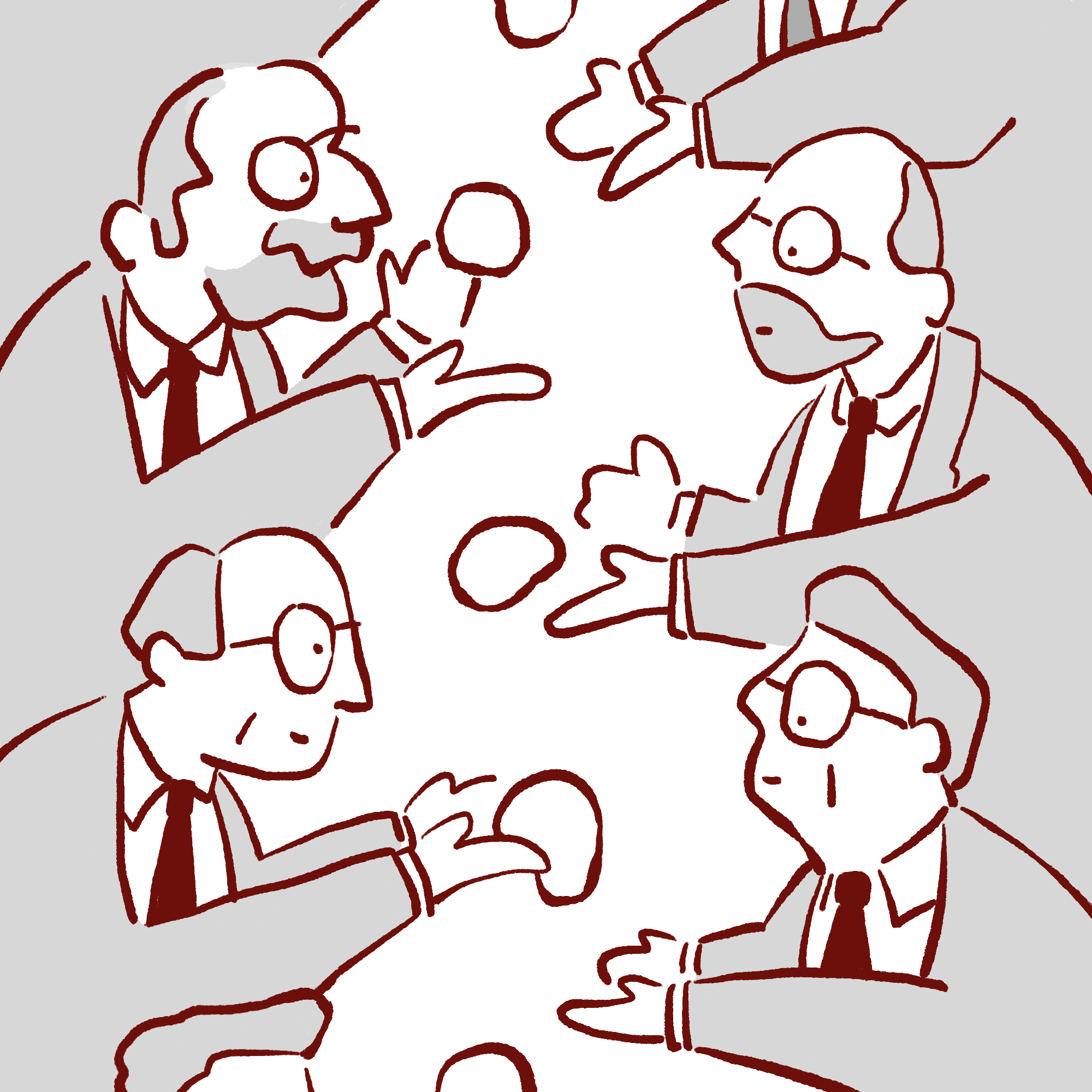
However, the "design work" that awaited me at the company I joined after graduating from design school was a troublesome ordeal, like juggling in a gale, and it was as harsh as payback for my childhood dislike of conforming to others' pace.
Looking around, everyone else was juggling while riding a unicycle in a gale. Medical books, facility manuals, textbooks — these were familiar in daily life, but I found myself clumsy and unable to skillfully handle cultures that hadn't been input into me. Overwhelmed by my lack of skill as a designer, I repeatedly worked long hours and burned out after about five years.
The bad part about working long hours is getting sick, and the good part is having a little money. Even after quitting my job, I often bought clothes. This was another bad habit I picked up after moving to Tokyo. Among them, a pair of shoes called "blueover," made by the same designer as WONDER BAGGAGE, caught my eye. At that time, I wasn't even aware of the brand name, nor did I know about its production background. It was just a pair of shoes with a design I liked.
I bought them, wore them, and uploaded a picture to social media. The manager of the flagship store at the time saw it, and we started communicating via SNS. While I was receiving unemployment benefits and feeling lost about what to do, I saw that manager posting on SNS, looking for "someone who can design, take photos, and write." I raised my hand. It wasn't so much a choice as a natural action.
Without asking about salary or working hours, I moved to Osaka and started working, and I felt a new wind blowing. It was still the gale of society. It wasn't a gentle breeze caressing my cheek. But this time, I was able to enjoy riding that wind with an umbrella, as if flying. Moreover, I had more opportunities to speak directly with the designers of blueover and WONDER BAGGAGE, and the more I learned about the design concept of their products, the more I felt a sense of tracing and expanding my own tastes.
The place where my own preferences and tastes, refined through selection and retention, converged. This was undoubtedly communication.
I believe that my life, which I've lived while causing trouble for my parents, has been consistently connected to society, even when it seemed like I was in control. Society shaped me, and I, in turn, like nested dolls, shape society. That's why I believe I can convey products that require communication, like WONDER BAGGAGE and blueover.
I am by no means special, but there is a form of communication that only I can achieve, and it connects with society and with someone else somewhere. That has become my job. Experiencing that reality after coming to Osaka allowed me to breathe in the midst of the gale.
My dream of becoming a novelist didn't come true, but there was a self and a world I wouldn't have seen if I hadn't pursued it. Perhaps I wouldn't have seen it if I hadn't aimed to be a novelist.
The only thing I believe I can control is not to betray that communication. That means not betraying society and not betraying anyone I'm connected to. That's why I intend to continue connecting strongly with society, for my parents and for my own child.

%0AMy%20parents%20must%20have%20had%20a%20tough%20time.%0AWhen%20reflecting%20on%20my%20own%20views%20of%20work%20and%20society,%20that%20was%20the%20first%20thought%20that%20came%20to%20mind%20when%20I%20looked%20back%20at%20my%20childhood....)