#03 | Society from a Manufacturing Perspective
Discomfort with Society and "Invisible Molds"
To me, society is a "totality of relationships" where people connect, and these countless connections intertwine to form a single order. It's like an invisible web that we are born into, live our daily lives within, and, before we know it, feel like we are functioning as a part of.
Society exists in smaller communities like families, schools, and workplaces, each with its own rules, values, and order. People are given roles within these communities and play a part in them. However, this structure can sometimes feel "suffocating." Since childhood, I've always felt a certain discomfort with the "invisible molds" that pervade society.
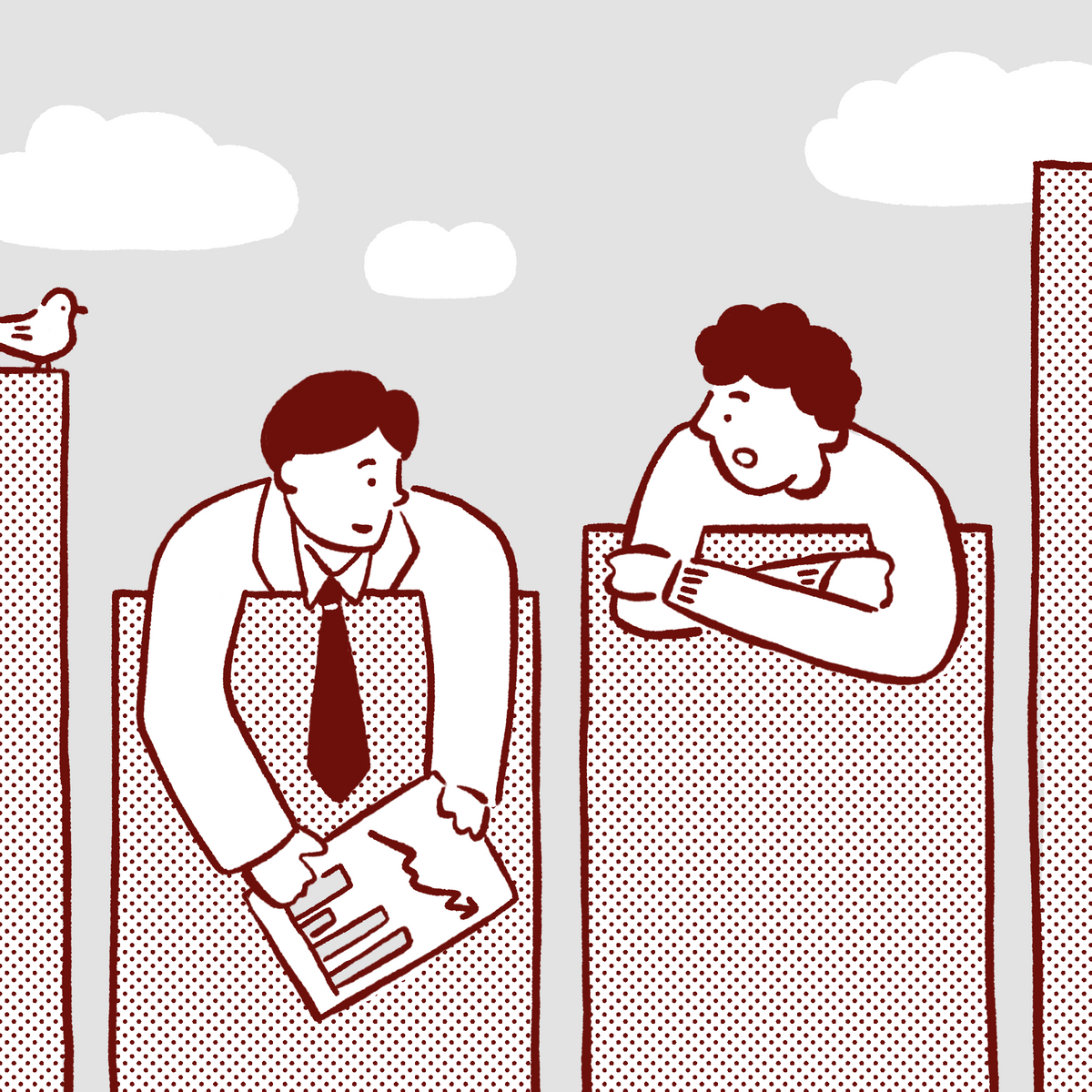
My family was a very typical one, probably falling into the median income bracket. My parents constantly told me that "going to a good university is an absolute prerequisite for success in life." However, I always felt a sense of unease about this statement. Why was it so important to go to a good high school and then a good university? I grew older without ever fully understanding the reason.
At the time, it was considered normal to obey one's parents, and in school, solidarity in communal living and the values formed within it were dominant. I felt as if I would be cast out of the community if I didn't accept those values. Even though I questioned them and didn't fully agree, I felt compelled to remain within that framework.
This state of mind continued until I entered the workforce.
Encountering Design and Self-Formation
I originally disliked studying. Or rather, I couldn't find any meaning in it. As a result, I failed to meet my parents' expectations, failed my university entrance exams, and gave up on further education. Looking back, I suppose I was considered a "poor student" at the time.
For the next year, I simply had too much free time. My parents, who still believed that attending university was the norm, tried hard to make me study, but I remained lethargic and wasted time idly. As that time passed, a sense of urgency began to grow within me. The realization that nothing would happen if I continued to grow older in this way. The fear I felt when I imagined my future life and saw nothing there. It was then that I first began to consider looking at my own life.
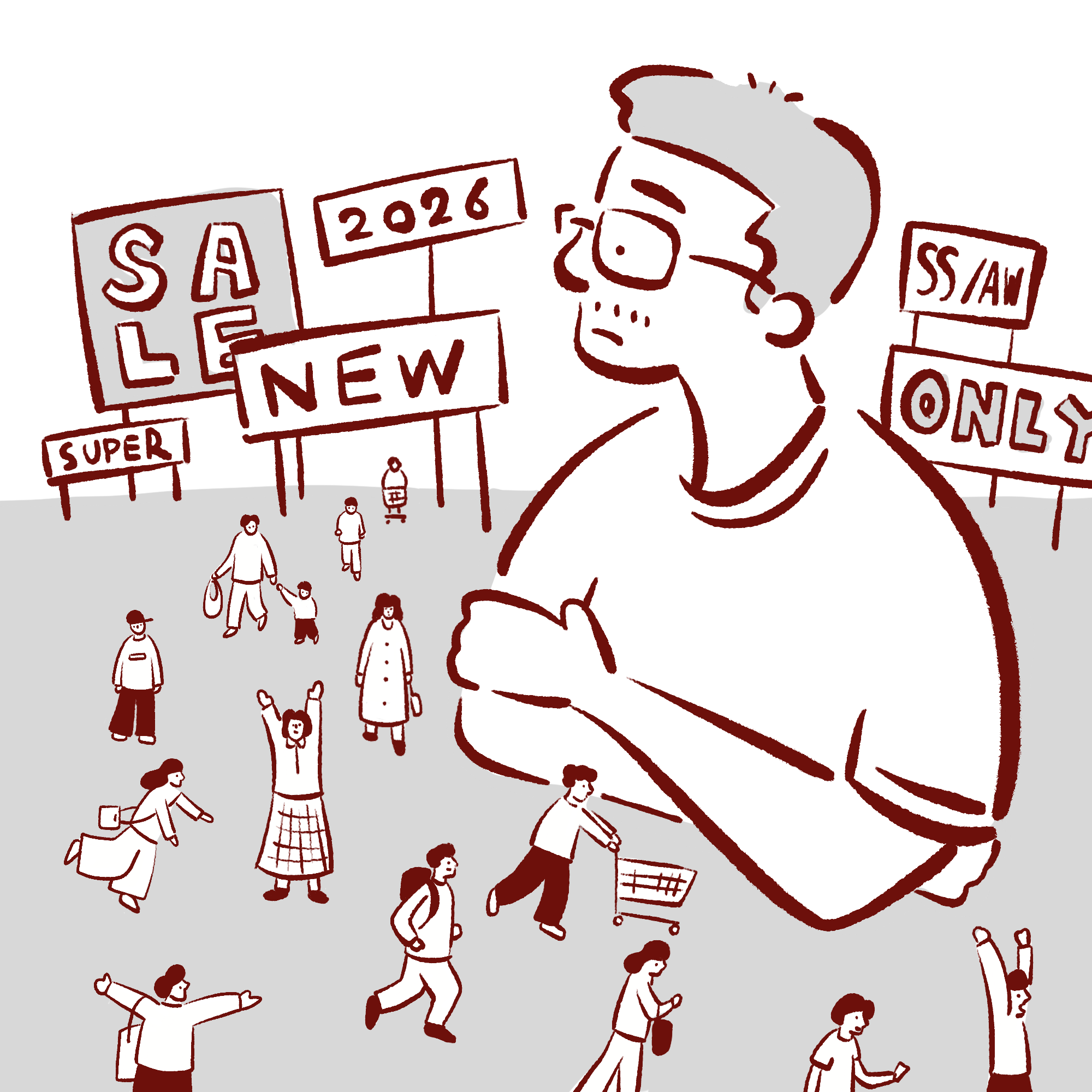
When I thought about what I wanted to pursue as a profession, what came to mind was unraveling the things I had been passionate about until then. Having spent my formative years in the 80s and 90s, Japan was in an economic boom, overflowing with various forms of entertainment. Mass media like magazines and television greatly influenced me, and it's safe to say I was stimulated by the abundance of consumer goods. This consumer culture fueled my desires and inspired me to acquire various things. Among these, what interested me most at the time was "design." The fact that design was applied to things that so greatly stirred my desire to consume, and above all, that design was a crucial element for me, led me to become intensely interested in it. Interiors, audio equipment, sneakers – designed objects truly captivated me.
Driven by the desire to work in design, I ended up attending a design vocational school. This was the first time I truly "seriously studied." After two years of learning, it was time for job hunting, right in the middle of what was known as the "employment ice age." However, I was able to remain optimistic despite these societal circumstances. On one hand, I had a sense of inferiority for not having gone to university, but on the other hand, I felt it was "lucky just to be able to work."
In that situation, I believe any design company that would hire me would have been fine.
After that, I was fortunate enough to work at a product design office. Even in what would now be called a "black company" environment, the fact that I could do design, which I loved, as a job, and the sense of social participation I gained from earning a salary through work, somehow enabled me to work fulfilling even in harsh conditions. In design work, my goal was the extremely pure and legitimate desire for the product (item) I created to be released into the world. To see my own designs on the shelves of stores I frequented in my daily life – that is a kind of goal and aspiration for a designer. I was also one of those people who held such aspirations. And thankfully, at the office I belonged to, I had many opportunities to see the products I designed in various places.
For me, who had previously questioned and felt unsatisfied with situations within the small worlds of family and school, these times, and the feeling that I was actively participating in society, were very stimulating and fulfilling.
However, as I repeated these stimulating and fulfilling experiences over time, I began to see a different landscape.
Questions about the Structure of Monozukuri (Manufacturing)
Society operates on the principles of a market economy.
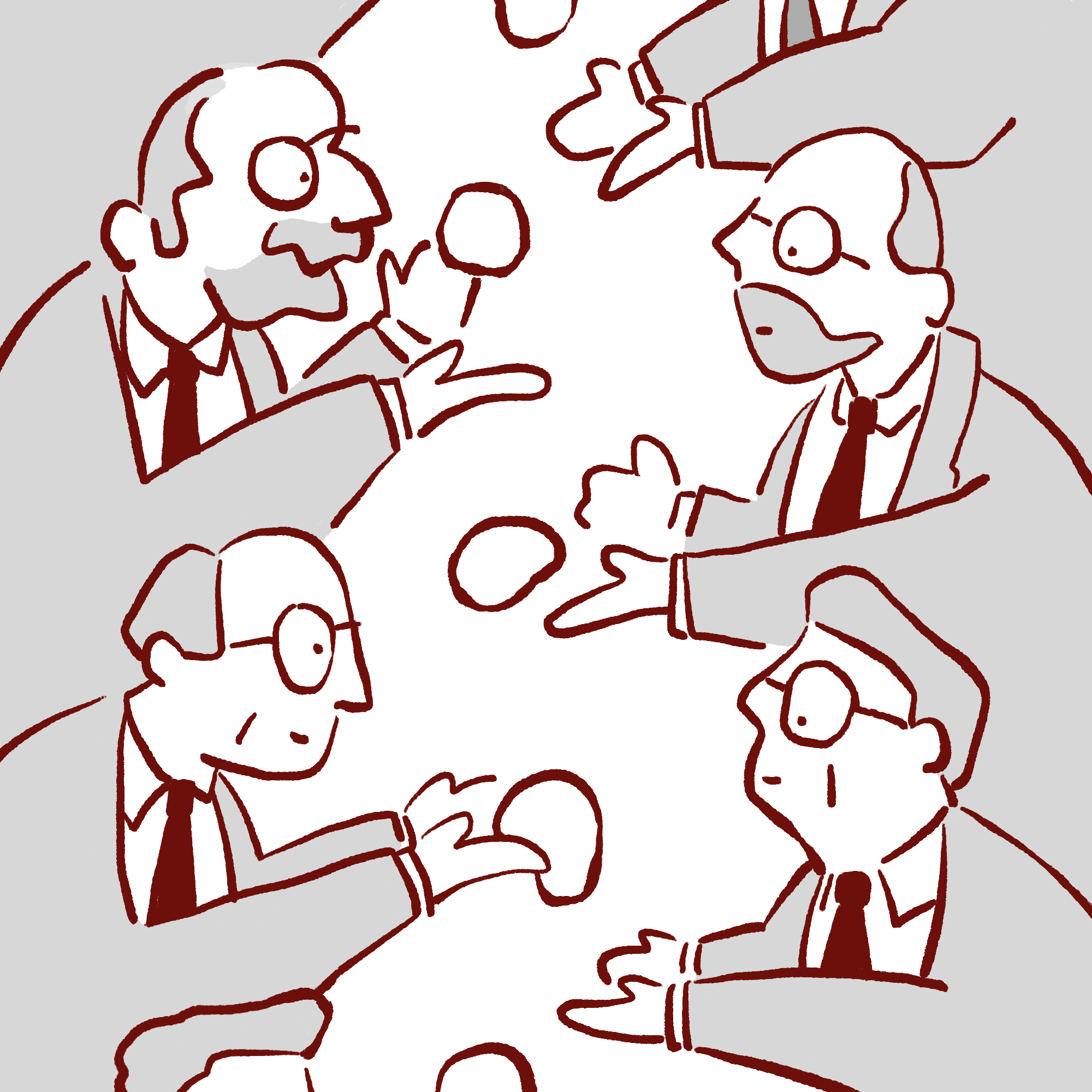
Companies form collaborative and division-of-labor systems to generate sales (profits), and with competition added, society as a whole tends to move strongly in the direction of capitalism. In this world, new products and services are created every year to compete for market share with other companies. It's a highly efficient, rational, and fast-paced world. Naturally, at the company I belonged to, we continuously proposed designs based on product planning and marketing documents from clients, aiming to win in this competition. We would propose designs for the documents presented each year and move onto the next project without a moment's rest. In the blink of an eye, the next model of the same product would be requested. This cycle was an unavoidable structure for the company's continued existence and development, and for competition with other companies.
However, I gradually couldn't help but feel a sense of unease about the act of product design, which I had initially admired.
The legitimacy of that cycle felt like a righteousness solely within the economic market principles, somewhat different from what humans truly need. Furthermore, it was unclear to what extent design was functioning within the overall manufacturing process. I had no way of knowing what results my designs were generating in the market. Even when company representatives told me, "You've produced good designs" or "Thanks to you, sales have increased," those results were the culmination of efforts from many people, including planning, sales, production, and distribution.
Of course, products don't sell on design alone. So, what does it mean for something to "sell on design alone"? It was difficult for me, in my position, to answer that question. Nevertheless, I believed in the potential of design. I wanted to challenge the sense of unease I described earlier. I believe I wanted to find my own form of "proper manufacturing" through design.
The 2000s, when I was working, was a period when Japanese manufacturing was peaking and transitioning to a new era. From analog to digital, from hardware to software—this shift fully took hold with the advent of Apple's iPod. Furthermore, after the Lehman Shock and the Great East Japan Earthquake, changes also came to Japan's manufacturing industry. In the local manufacturing sites I was involved with, companies unable to adapt to the wave of globalization began to stand out, and their former vigor gradually faded.
Around that time, I left the company I was working for and started working as a freelancer. I continued to receive requests from clients and made a living through design, just as before. Work was thankfully going smoothly, but on the other hand, I was searching for "what I, as an individual, could do in this changing landscape." So, while working as a freelancer, I took a particular action: I launched my own brand and actually started selling products.
In April 2011, I launched the sneaker brand "blueover."
For someone like me, who had only ever worked in the world of product design, it was a daring challenge, but it was an action born from the desire to find some answer to the consumer cycle and challenges in domestic manufacturing that I had always felt. It's not a lie to say I wanted to test the power of design, but I think that was secondary.
Looking back, although I was liberated from the oppression of family and school once I entered society, I found myself constantly seeking new questions through work. Discovering questions and problems in the phenomena I encounter throughout my life—this isn't something I force myself to come up with. Rather, it's because when I compare them with my way of life, I don't simply end at "that's just how society is" when faced with discrepancies, but unconsciously ask why it is so. And perhaps that is also a part of who I am.
In the course of my life, I became involved in manufacturing and participated in society through work. For me, making and selling things felt very familiar and natural. While products make our lives convenient, the current structure of mass production and mass consumption continues to place considerable stress on both people and the global environment. I feel that mental exhaustion and environmental burden are two sides of the same problem, both brought about by an "excessive consumption structure." I believe that the work I do must find a solution to this problem of "excessive consumption structure."
My first brand, "blueover," continues to this day as a purely domestic sneaker brand. It's a brand that seeks the sustainable possibilities of manufacturing by distancing itself from the rapid consumer cycle and collaborating with local shoe factories that operate on a division of labor. In 2012, I also launched "WONDER BAGGAGE." This brand is a bag brand positioned similarly to "blueover."
Both are categorized as fashion accessories and belong to the same industry with similar distribution channels. The brands plan and design, collaborate with factories to produce items. They then manage inventory, conduct promotions and sales, and distribute through wholesale and retail to the market. This style is close to what's known as an SPA (Specialty store retailer of Private label Apparel) model.
Compared to typical large brands, our brands have longer development cycles and sell a single product for an extended period. We also try not to hold excessive inventory. And we are very happy to feel that those who use our products share the same sentiment, cherishing them for many years, using them carefully, and repairing them repeatedly. Nevertheless, our business scale is still small, and while we manage to operate as a small business, we are constantly struggling between our ideals and reality. We continue to experiment and innovate to uphold the questions we raised and our conviction to find solutions.
Brand and Response to Society
I have always harbored questions and a sense of unease, both in the small worlds of family and school in the past, and even after I started working. To resolve these questions and discomfort, some kind of action is necessary, and each time I thought I had solved something, it would resurface in a different, larger form as a new challenge. Now, having transitioned from designer to launching brands and selling products ourselves, taking on the role of manufacturers, I am confronted with questions about the "engineered consumption" that so strongly influenced me in the past.
In manufacturing, society is strongly driven by capitalism. It's a structure where goods are produced, services are established through monetary exchange, and profits are generated for companies. I feel that the neoliberalism brought about by capitalism in recent years has created various弊害 (negative consequences) due to its excessive competition.
I believe that the fundamental issues of these negative consequences of excessive competition have not changed, even after more than a decade of questioning them. In fact, technological innovation has led to the mass consumption not only of goods but also of experiences and information, and there is now a scramble for not just disposable income, but also disposable time. In a world where everything can be imbued with value and become a commodity, it seems that producers are also having their time endlessly taken away for financial incentives.
These excessive behaviors, in addition to burdening the global environment, also exhaust people's minds and make it difficult to maintain a healthy spirit. As excessive neoliberalism progresses, as long as people continuously seek financial incentives, aren't we heading in the opposite direction of a healthy spirit?
Nevertheless, we believe that our work, within this capitalist economy, should aim for a healthy cycle of consumption and a return to a healthy spirit, truly befitting humans. To achieve this, I think it is necessary for people to gain "wisdom" in this rapidly changing society. This is because I believe it is important to correctly recognize the current situation and be able to objectively judge oneself. If we can do so, I think we can maintain a healthy spirit without losing ourselves in this fast-paced society. If each individual regains this perspective, it could be an opportunity to re-examine work styles and consumption patterns that are solely tied to excessive financial incentives. By doing so, I believe we can shift our focus towards liberation from financial incentives and improvement of environmental burden. For me, work is a means to concretize my inner beliefs about social structures and share them with others.
Society is formed by a multitude of human activities.
Through WONDER BAGGAGE bags, we want their owners to be able to learn about others through their work, and from that, learn about themselves. At the same time, we want them to correctly understand themselves and develop the sensitivity to accept change. To achieve this, we prioritize creating universal and beautiful products, rather than temporary, overly dramatized products designed to encourage consumption. We use durable materials that can withstand long-term use and leather that develops a unique character over time. This is because we aim to create products that bring joy of ownership as they age. We believe that people who use products made with such values can share the same values.
While I wish for a transformation in business models in manufacturing as well, the robust systems formed by human solidarity are difficult to change. This is because people cannot gamble on uncertain possibilities at the cost of their livelihoods. In a world where everything—objects, experiences, and information—becomes some kind of value and can be converted into money, I hope people will find the value of "being oneself"—a value not monetary, but one for achieving their own happiness. As a result, I believe they will also begin to pay attention to environmental considerations.
What we create, we want them to be those bags and shoes for that purpose.
And to create "shifts in perspective" and "opportunities to learn about others" that cannot be fully compensated for by mere objects, we have decided to start this content. This content aims precisely to function as an opportunity to learn about others. We hope to advance this content, allowing readers to overlap their own values with the societal views and work of various experts, and to learn from it.