
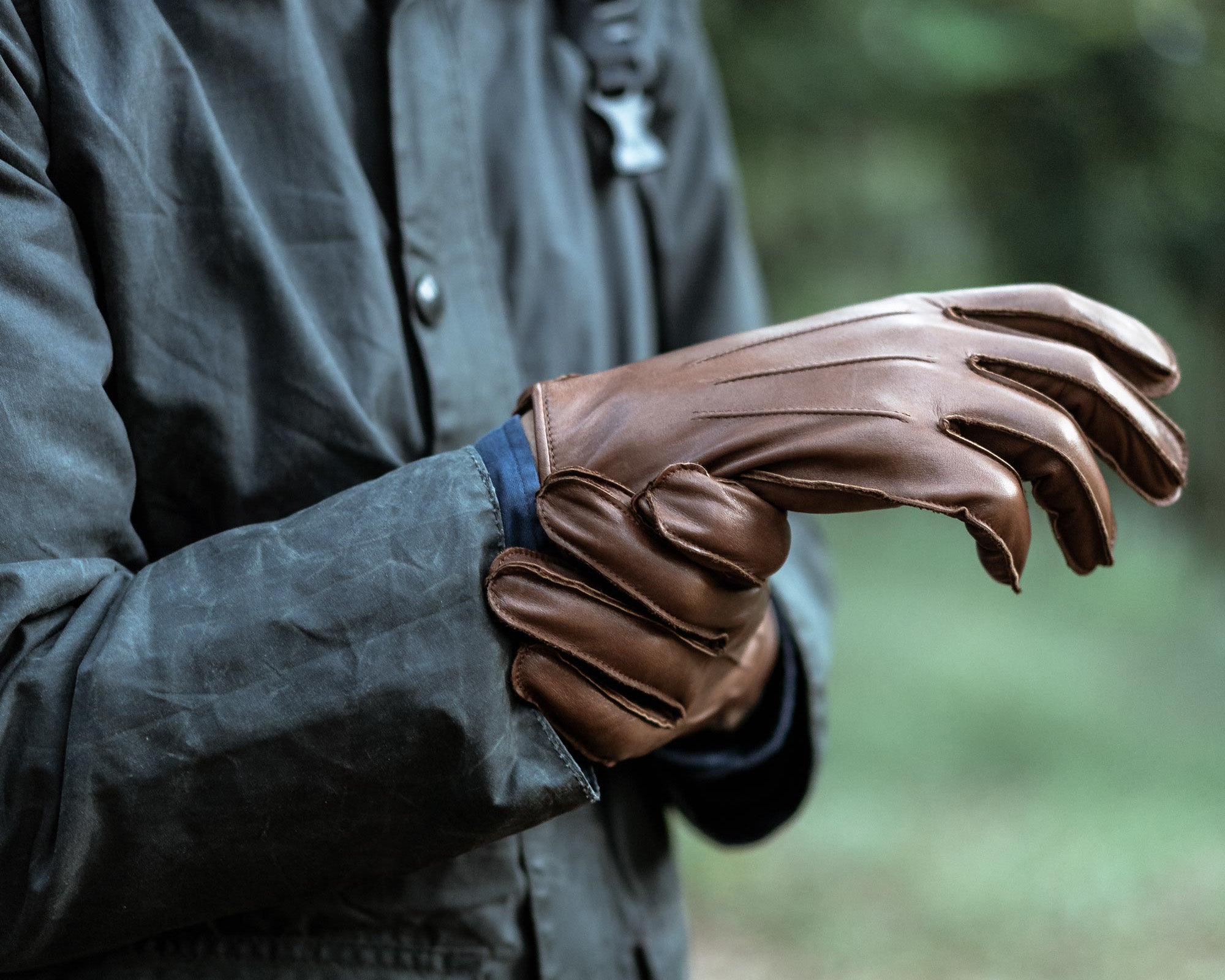
Fully washable.
Don't worry about getting them dirty.
Washable, and they evolve with you.
That's our pair of chopsticks.

Don't you give up
because it's not washable?
Every winter, I find myself wanting a pair of gloves.
Among the many types of gloves available—wool, fleece, nylon—there's one type that always catches my eye: leather gloves.
Given my profession and age, I'd like to wear them, but I've always held back because their maintenance and handling, especially in the rain, seem difficult.
Washable leather gloves
Washable Leather Glove
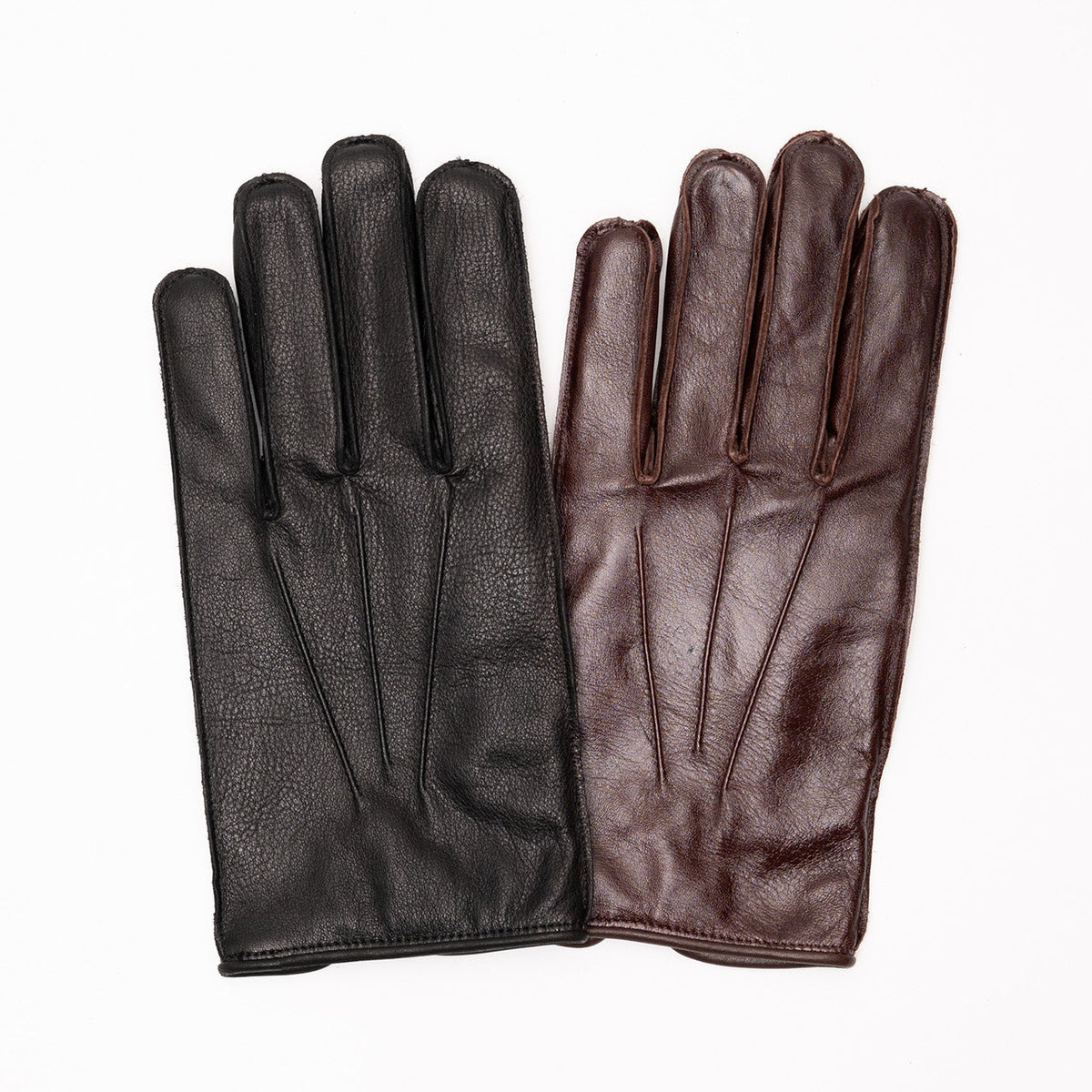
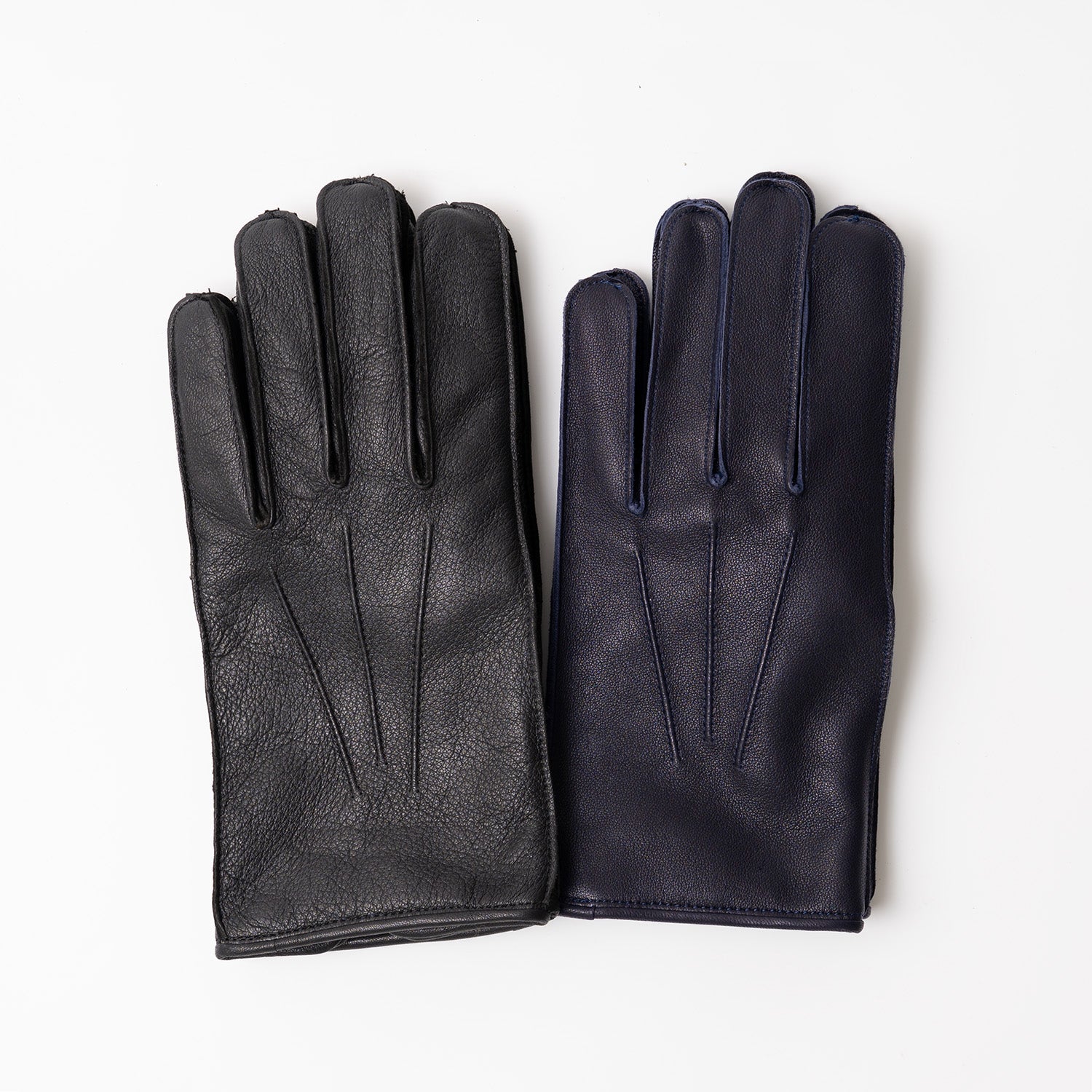
![Horse Leather Gloves [Washable/Single-piece leather/Business]](http://wonder-baggage.com/cdn/shop/files/26WL_bisi.jpg?v=1790819995&width=1500)
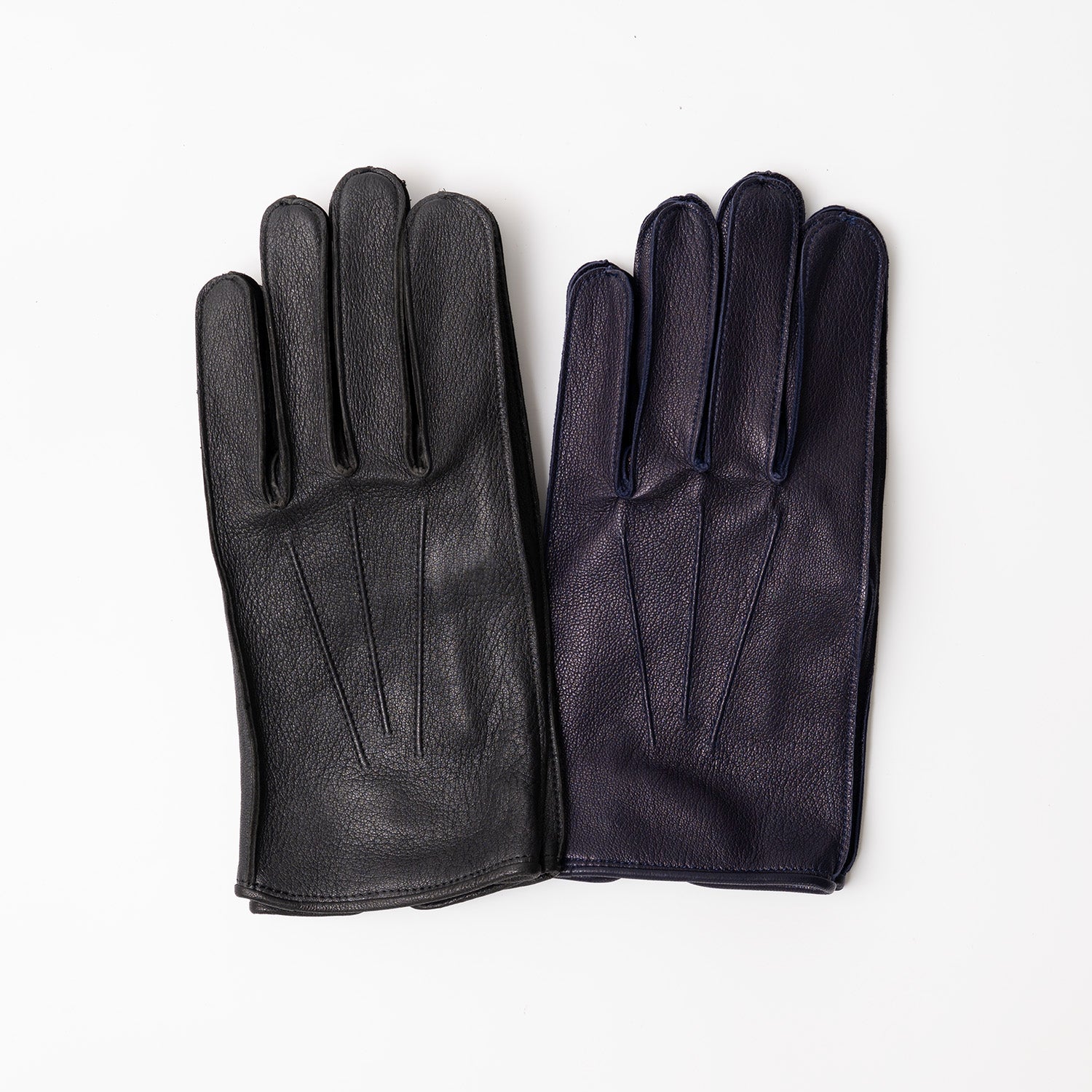
![Horse Leather Gloves [Washable / Windproof / Business]](http://wonder-baggage.com/cdn/shop/files/26WL_wgbk_001.jpg?v=1790820086&width=1500)

The original texture of leather, and it's washable
The leather gloves made by WONDER BAGGAGE maintain as much of the original leather texture as possible, yet they are washable. You can wash them without hesitation when they get dirty or even if you encounter sudden rain.
Yes, these are the leather gloves I've been looking for.
Two Types of Leather
Flexible and lustrous horse leather, combining strength with an elegant texture. Soft sheep leather that conforms to the hand, providing a natural fit. Enjoy the unique characteristics of each leather type.
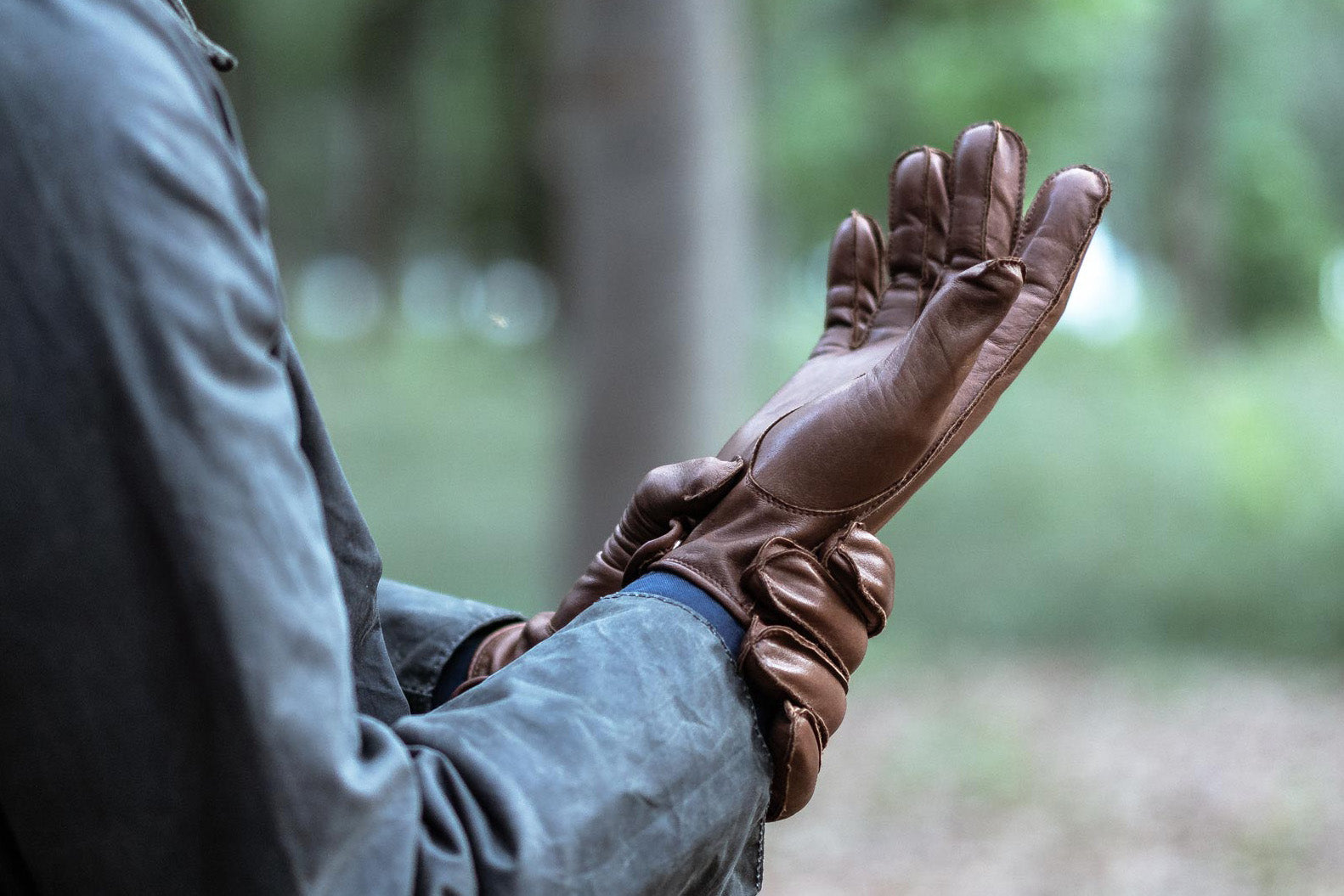
Horse Leather
Firm, lustrous leather. Characterized by high durability, said to be about three times stronger than cowhide.
Its dense fibers make it both durable and supple, with a beautiful fine-grained surface (ginmen).
Another attractive feature is how its color and texture deepen and become richer with age.
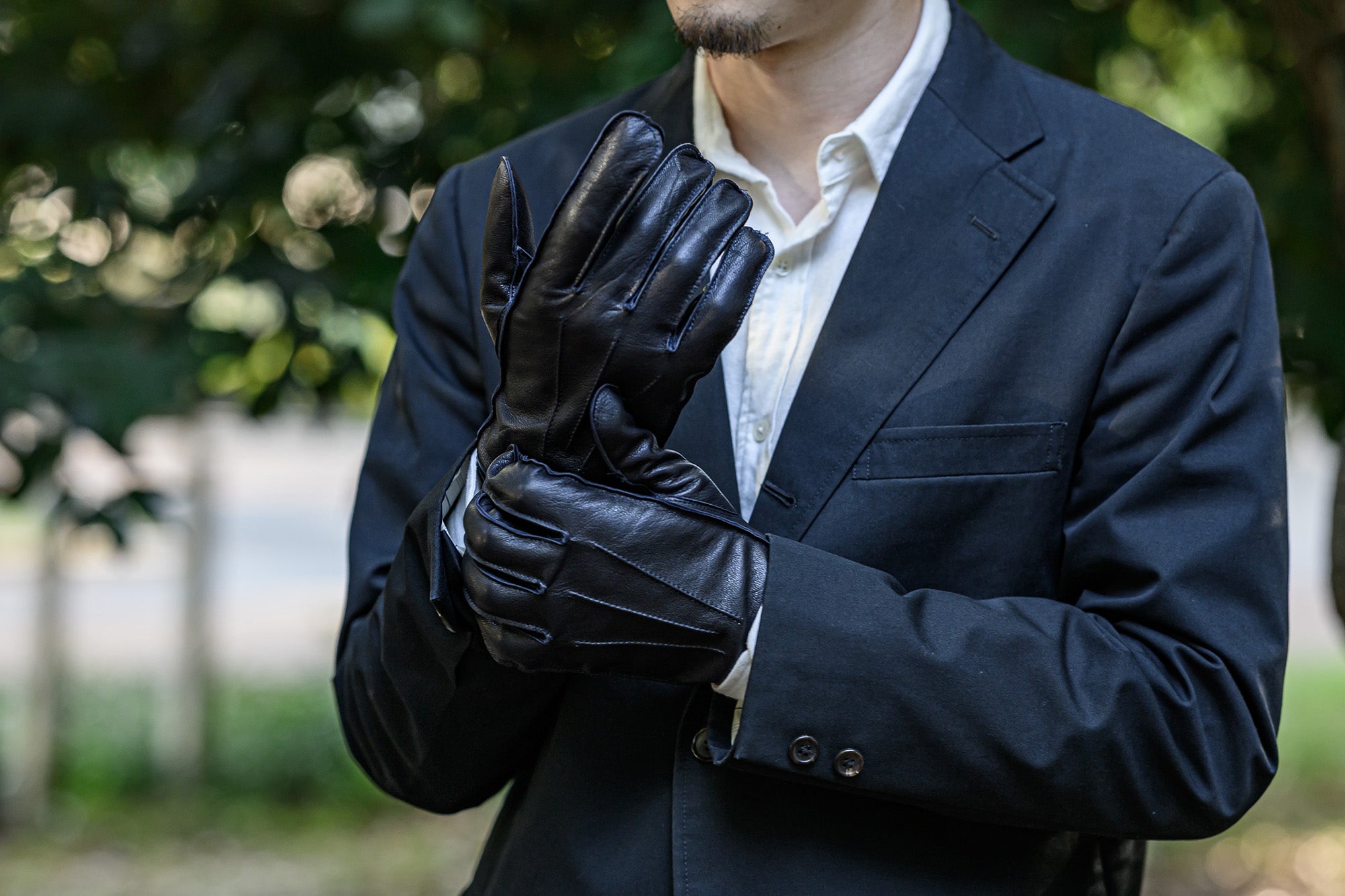
Sheep leather
This soft, supple leather molds to your hand for a perfect fit. Made from approximately 1mm thick sheepskin, it offers enhanced durability.
Characterized by its rich grain and elegant texture, the leather will slowly develop a unique patina over time as you use it.
Variation
Everything is washable.
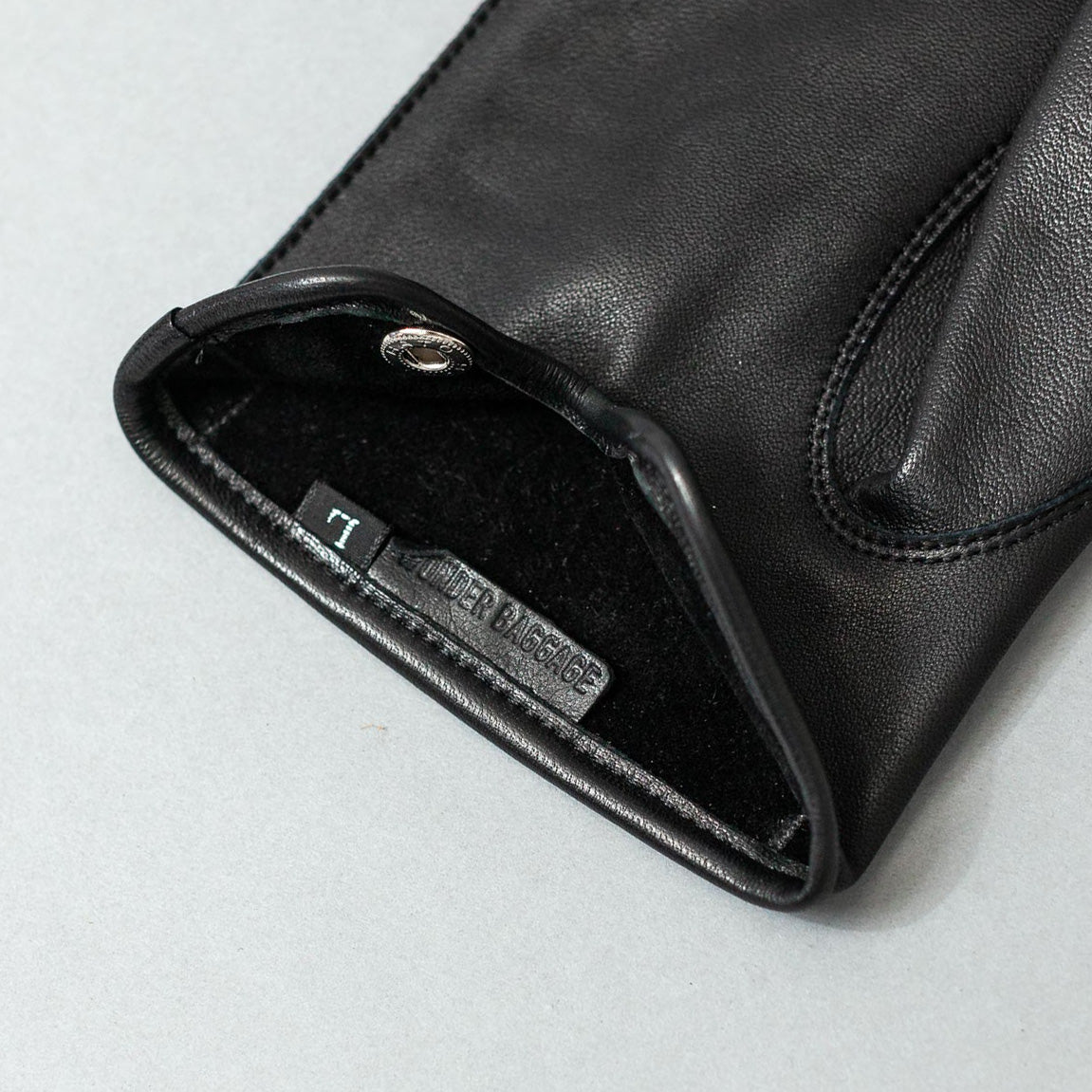
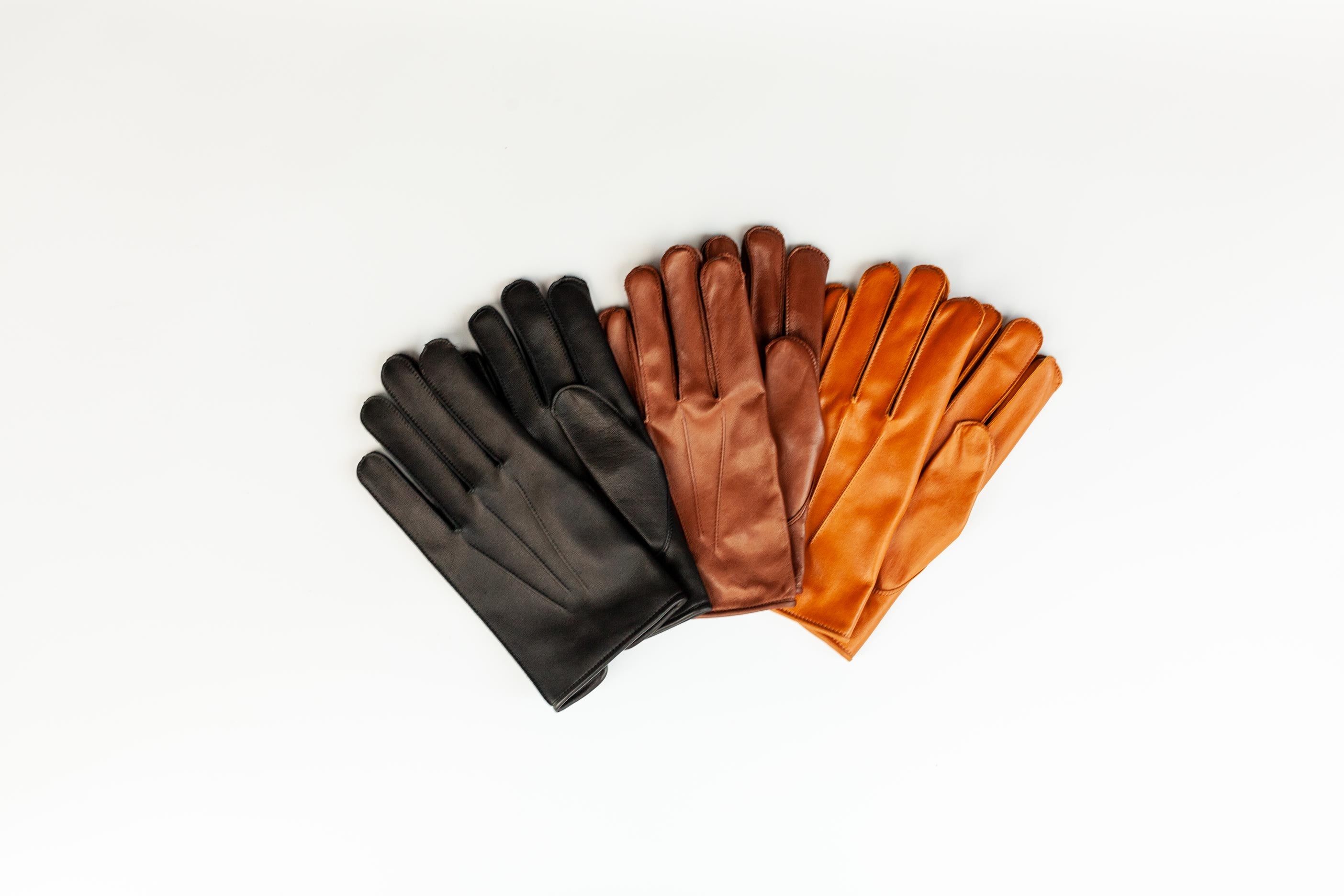
Single-piece leather classic type
Gentleman's business type. Featuring a design without lining, typically found in classic gloves, allowing you to experience the feel of the leather from the moment you put them on.
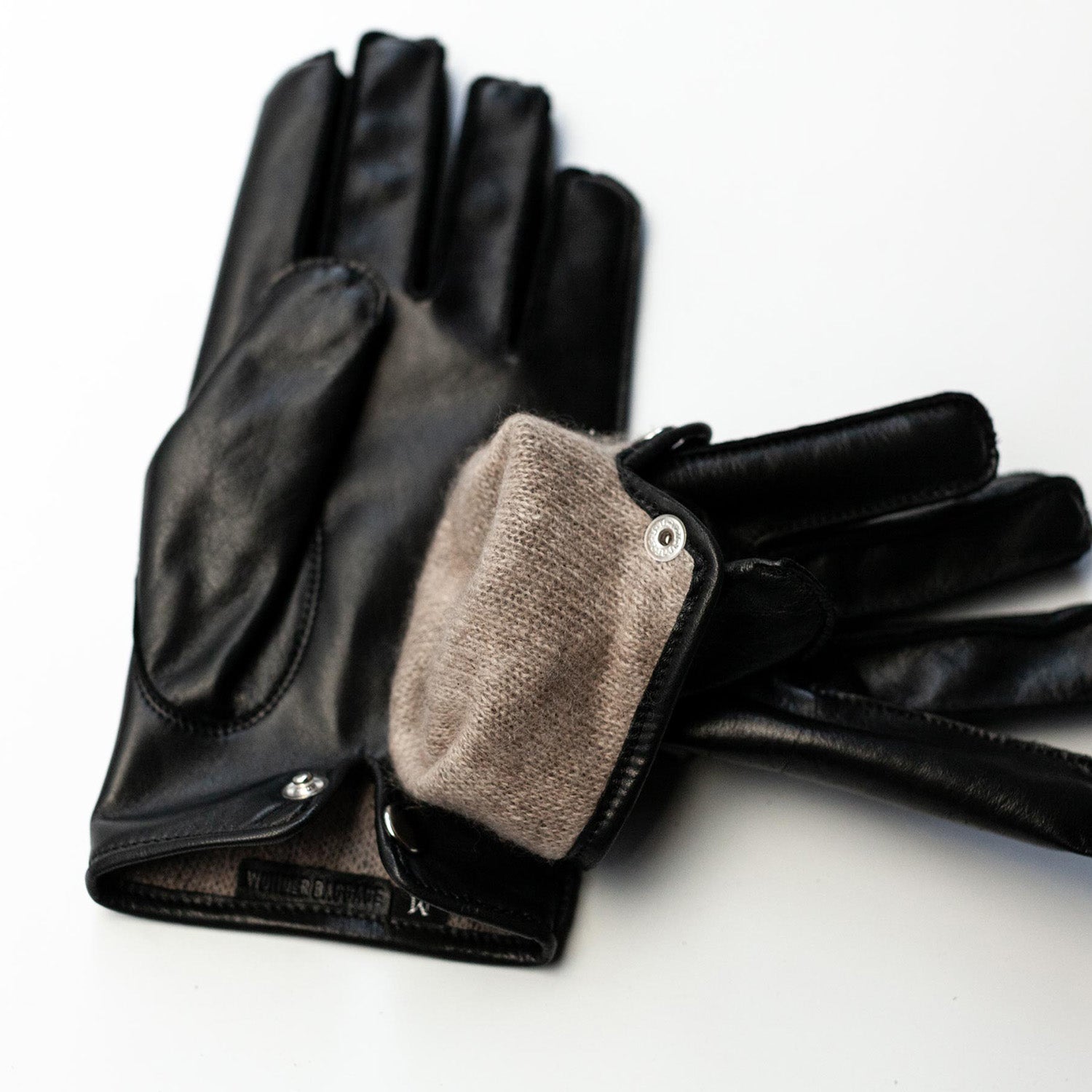
Premium Cashmere Type
This business model for men features a luxurious cashmere lining. The more you use it, the more the cashmere fibers loosen, allowing you to truly feel its warmth.
Windproof type
The pattern is designed with an inward-facing seam, and the inner material uses "Lug Warm Premier," which converts sweat and moisture into heat to provide warmth. This model is ideal for cycling and motorcycling, as it blocks wind and provides a noticeable warmth.
Design
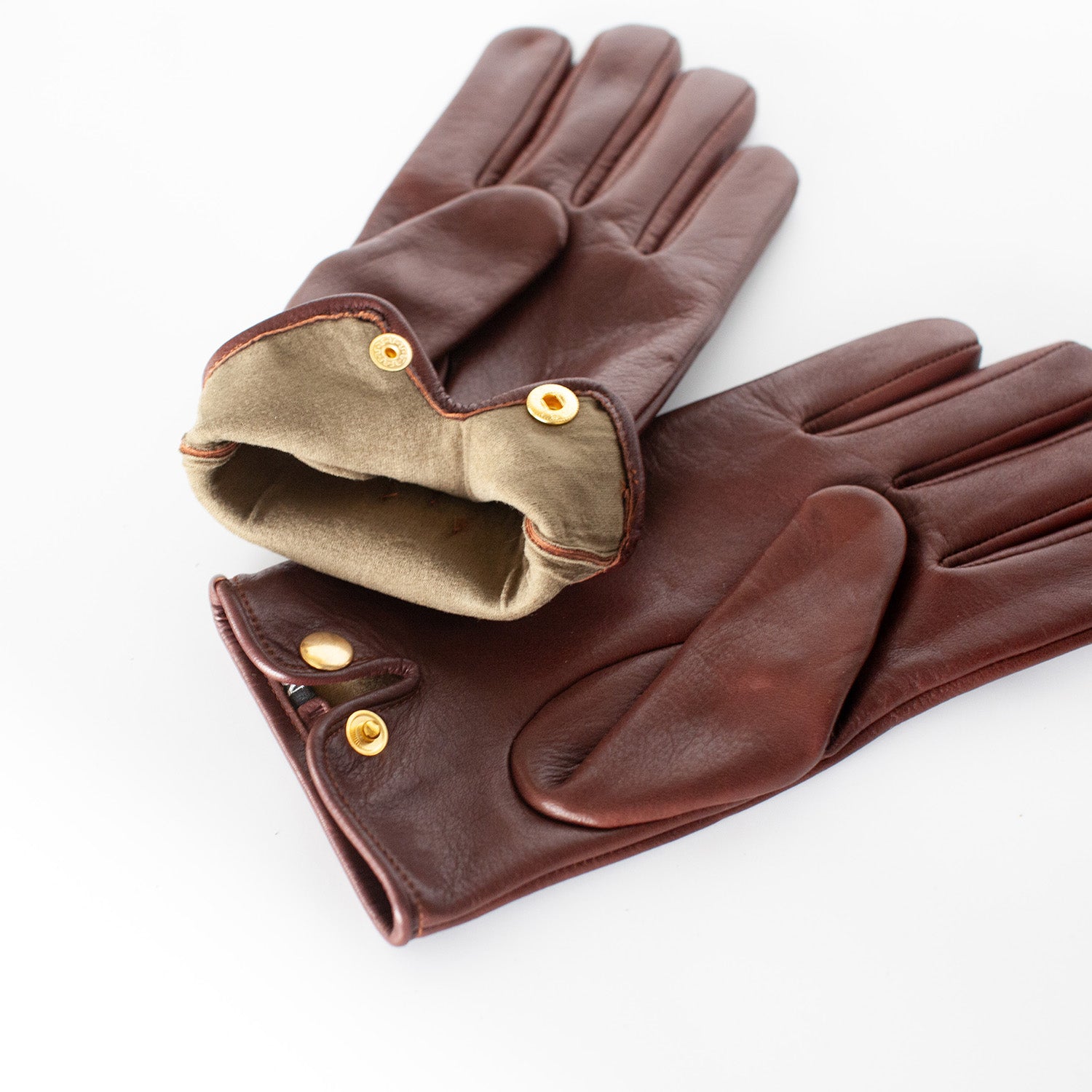
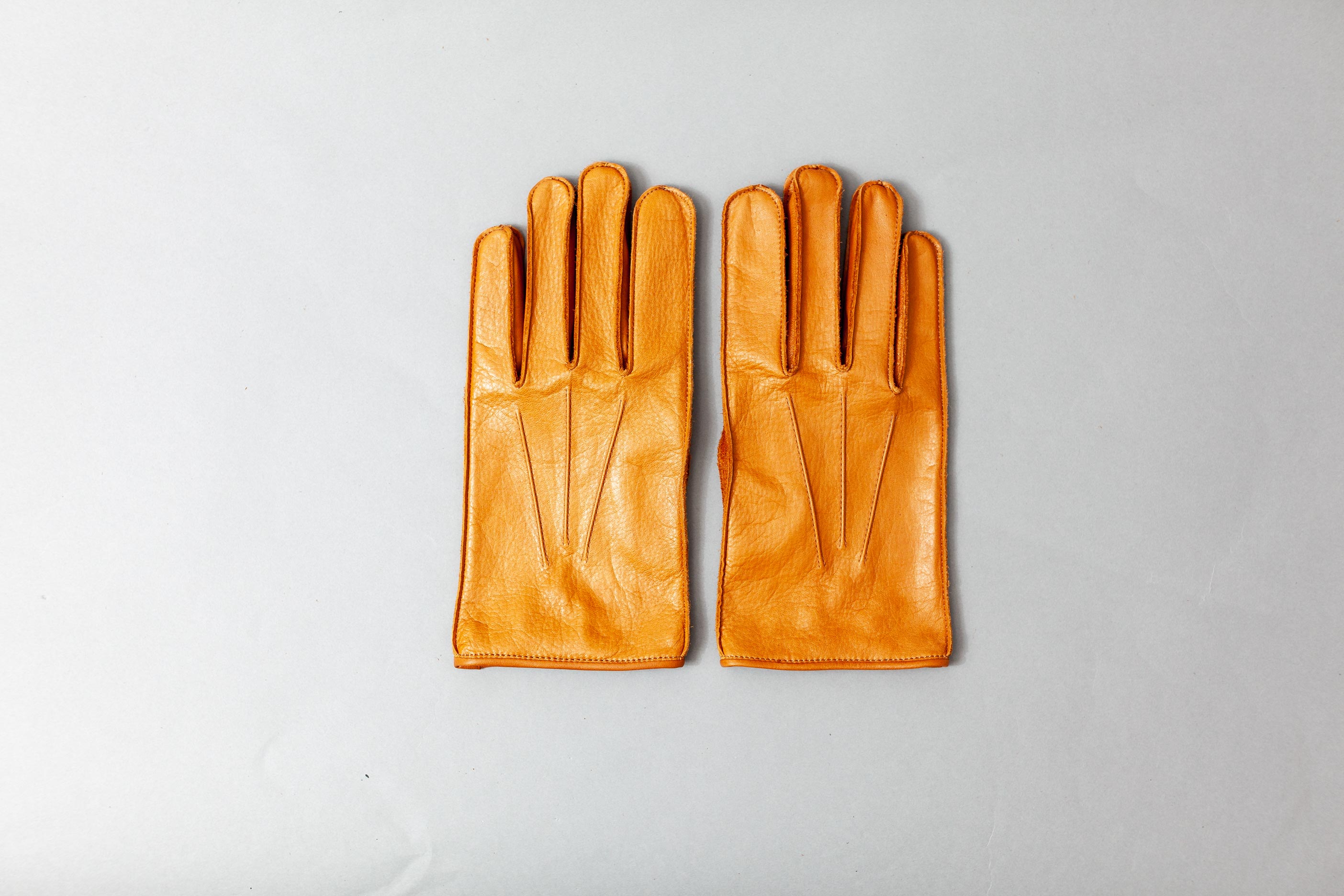
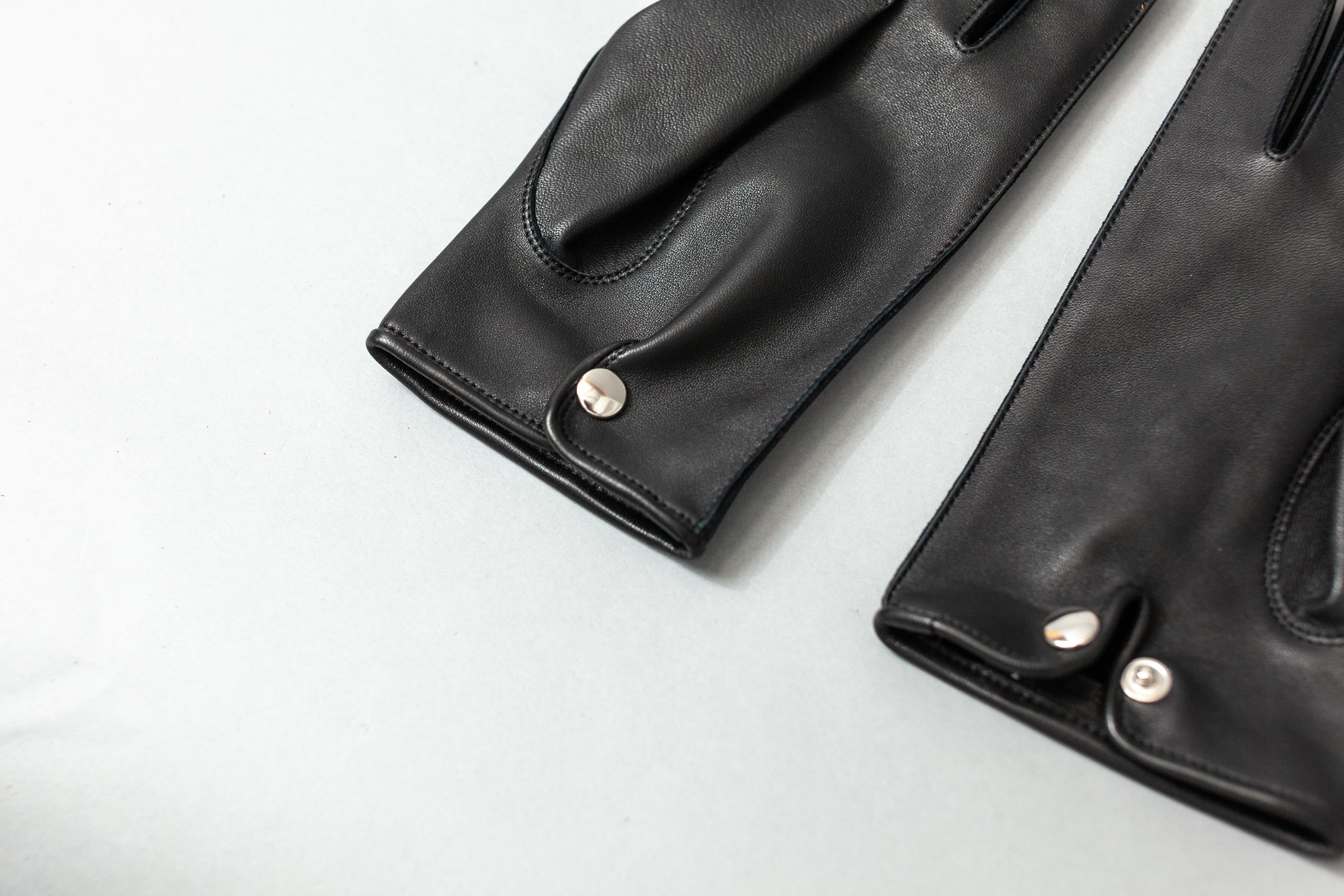
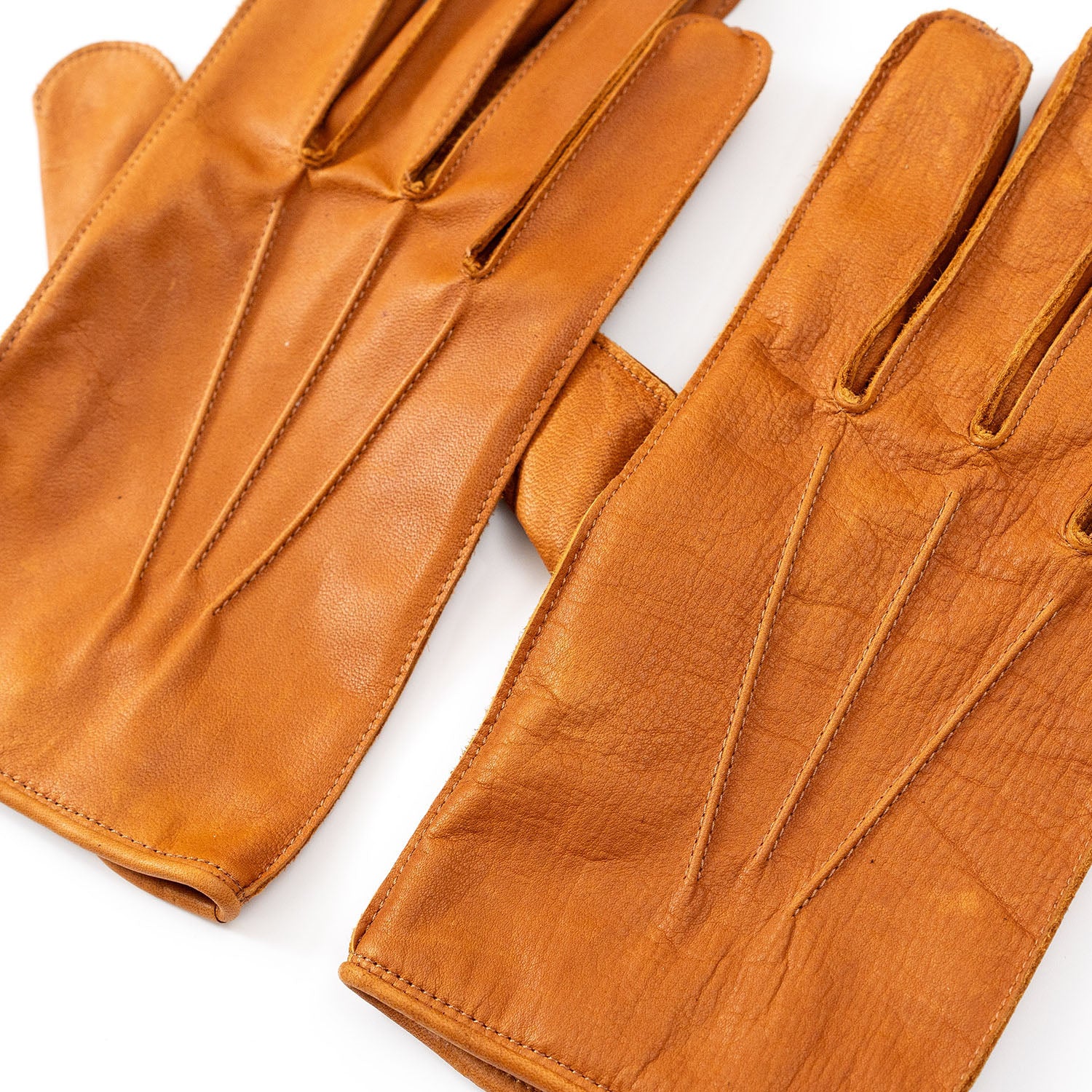
The exterior design is basically an outseam pattern with stitched leather edges, three decorative stitches on the back of the hand, and a button closure at the wrist. The emphasis is on maintaining the standard of leather gloves.
Washable leather gloves
washable leather glove
Washing Instructions
1: Wash hands with water or lukewarm water
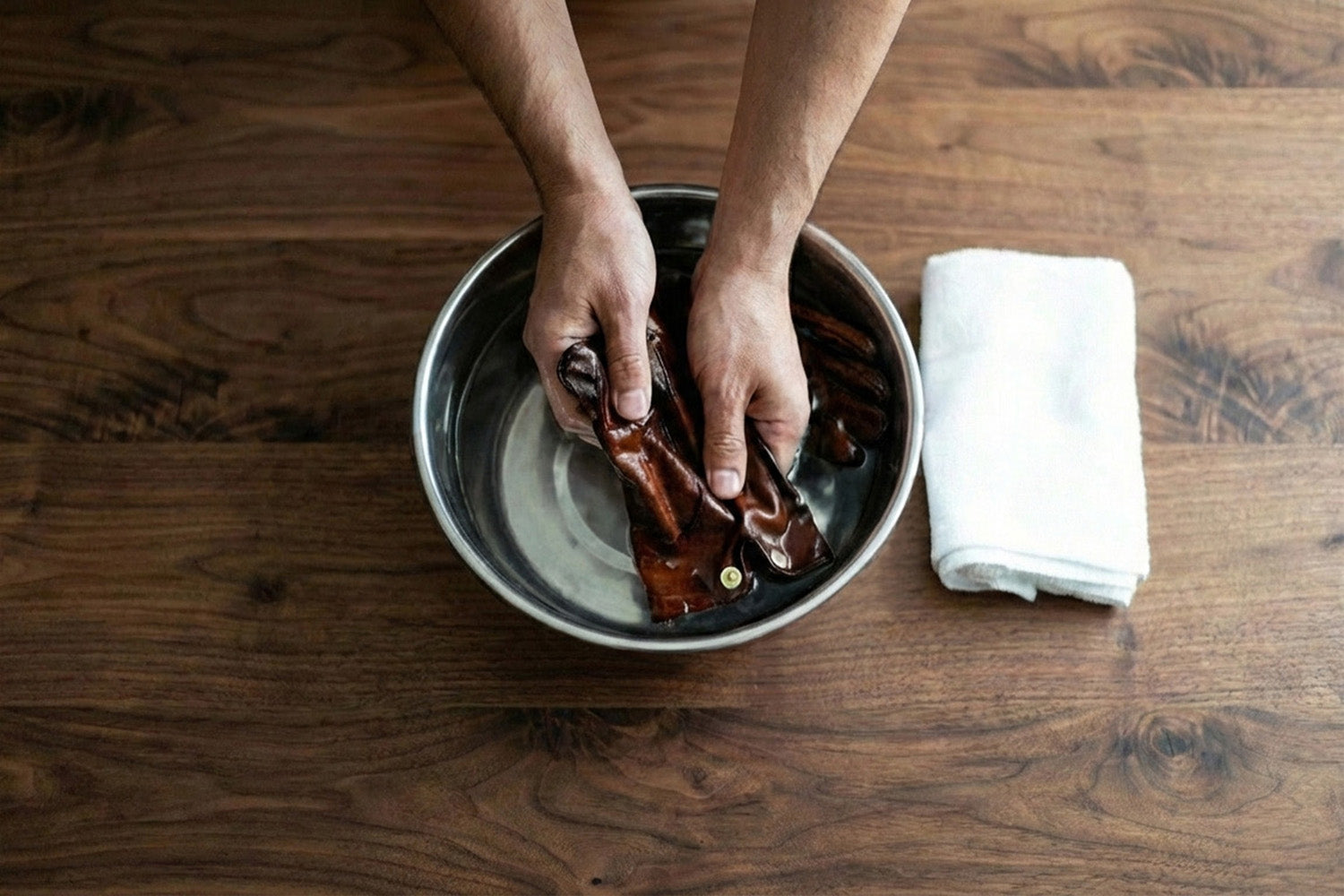
2: Sandwich between towels to
blot away moisture
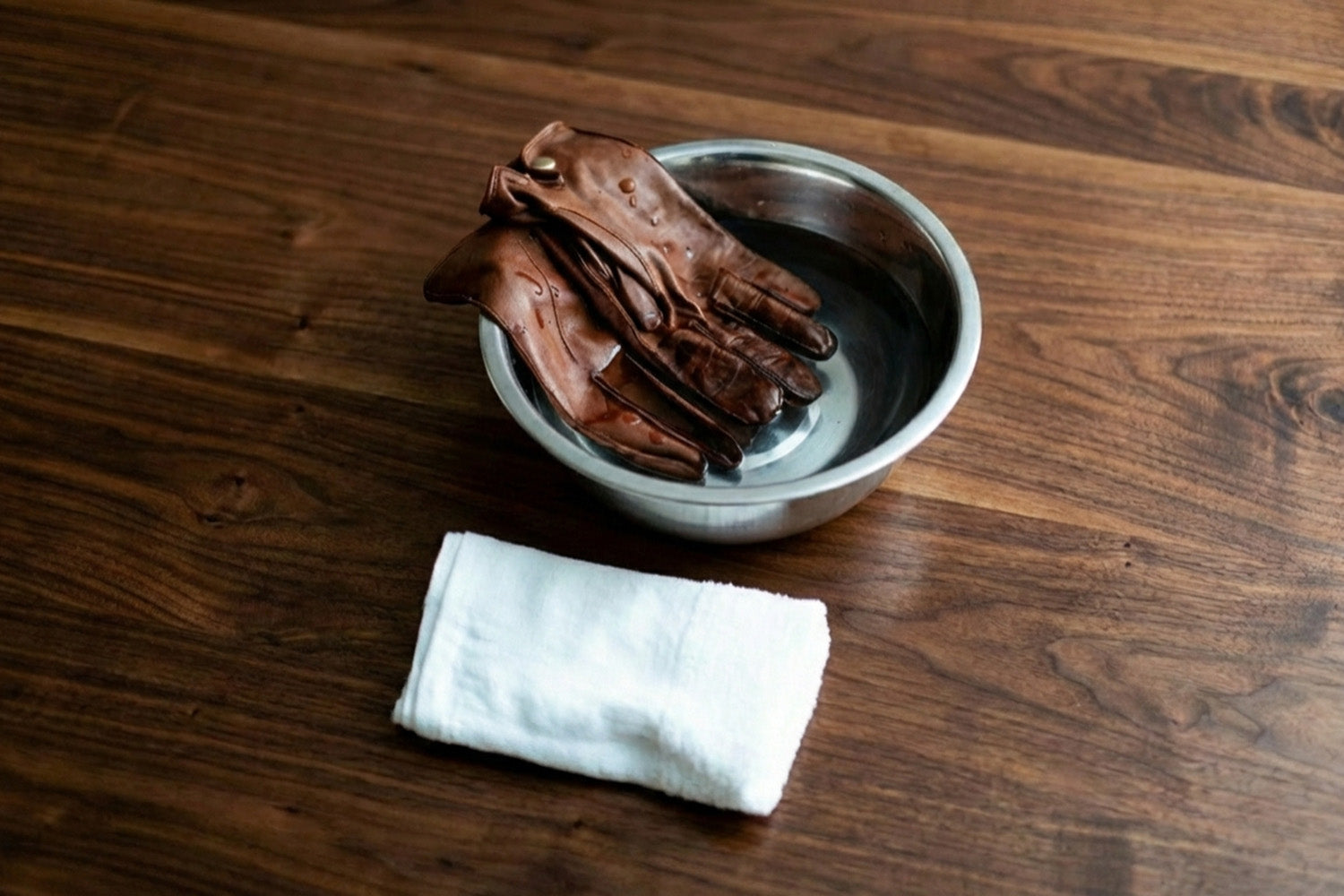
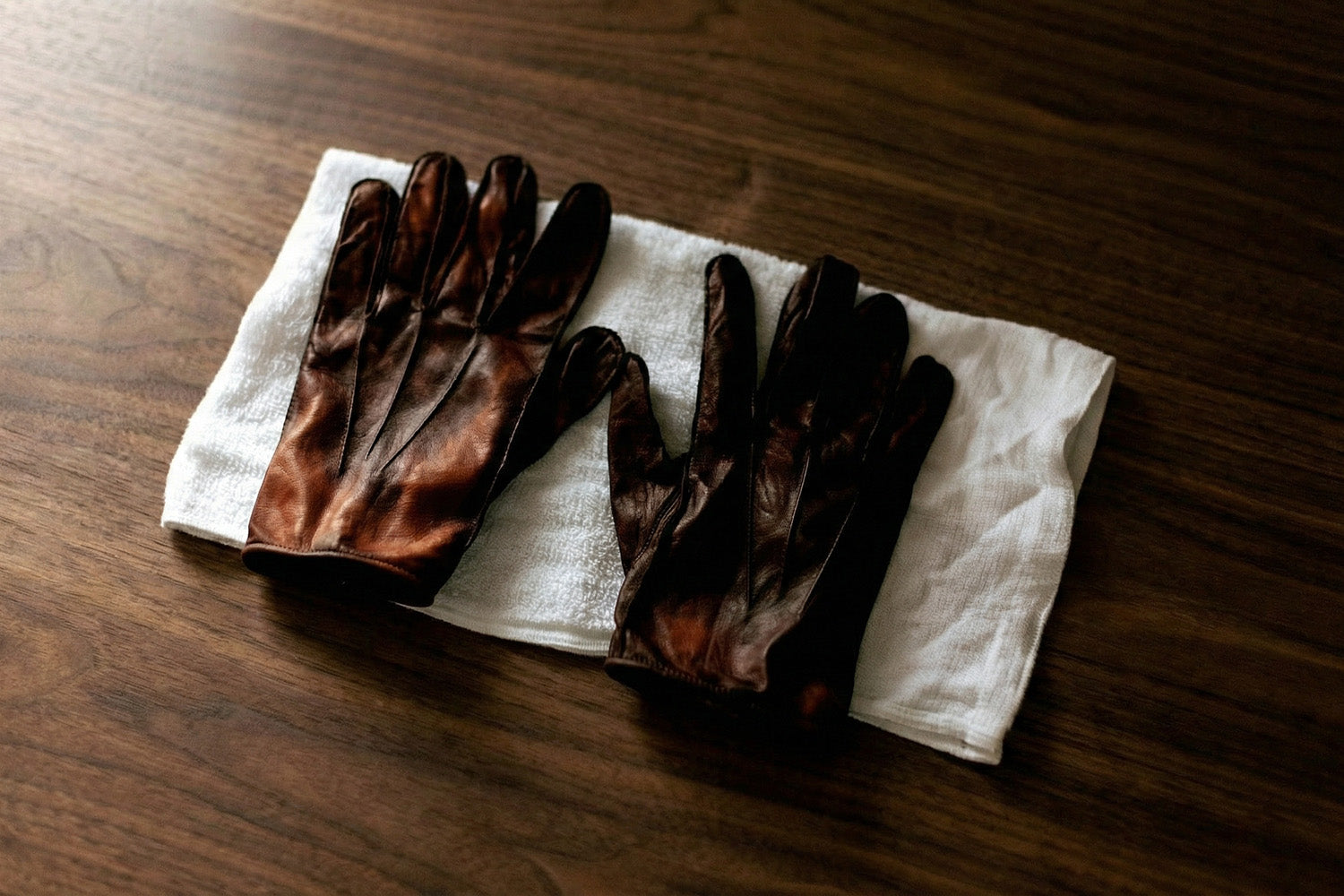
3: Air dry in a well-ventilated, flat area away from direct sunlight
Applying moisturizing cream after it dries will help the leather stay soft and last longer.
Behind the Scenes of Washable Leather Gloves
Transparent Manufacturing: A Story from SETOUCHI LEATHER
Among the brand's standard items, the "washable leather gloves" are particularly popular.
This time, we interviewed Hiroyoshi Enami (hereafter, Enami) of "SETOUCHI LEATHER," the company that created this washable leather and the gloves. He spoke about his thoughts on leather making and his products.
To begin, we'll briefly explain the types of businesses involved with leather to help you understand SETOUCHI LEATHER's operations. Leather starts as raw hide, which is the skin of an animal after it has been removed. From there, it undergoes many processes to become leather. The businesses that carry out these processes are called tanners. Then, businesses that sell various types of leather are called leather wholesalers. From there, product manufacturers process the finished leather into leather products.
- Tanner: A craftsman or company that processes animal hides into leather through a process called "tanning." They treat the skin to prevent decay and turn it into durable leather.
- Leather Wholesaler: Procures leather from tanners both domestically and internationally and distributes it to individuals and manufacturing factories.
- Product Manufacturer: A craftsman or factory that produces final products such as bags, shoes, and gloves.
While SETOUCHI LEATHER is categorized as a tanner, their operations extend beyond that. Typically, tanners only manufacture leather, but SETOUCHI LEATHER also acts as a wholesaler, distributing leather, and even proposes product manufacturing. Although founded in 2018, making it a relatively new company, its two representatives are very young for the leather industry and are undertaking various innovative initiatives.

Setouchi Leather
Setouchi Leather is a tannery based in the Setouchi region.
It was established in 2018 by Masahiro Inoue and Hirokazu Enami. Inoue is in charge of manufacturing and selling leather in Hyogo, while Enami handles leather product creation and sales in Kagawa.
The company aims to achieve "sustainable leather production" by regenerating hides that would otherwise be discarded as industrial waste, thereby contributing to the circular economy of environmental, social, and animal resources.
https://setouchileather.co.jp/
Turning discarded leather into a wonderful resource
Most of the raw hides handled by Setouchi Leather are considered by-products purchased from meat processing plants in the Setouchi region, and would otherwise be discarded. They place great importance on making leather from these by-products.
The leather we see has various backgrounds regarding its origin. For example, in some countries and regions famous for their leather, animals may be raised in a way that avoids damaging their bodies, in order to produce beautiful leather. This means the animal exists to become leather.
On the situation is different for the hides of animals raised for meat. The purpose is to obtain meat for human sustenance. The hides that are a by-product of this process are then reused as leather.
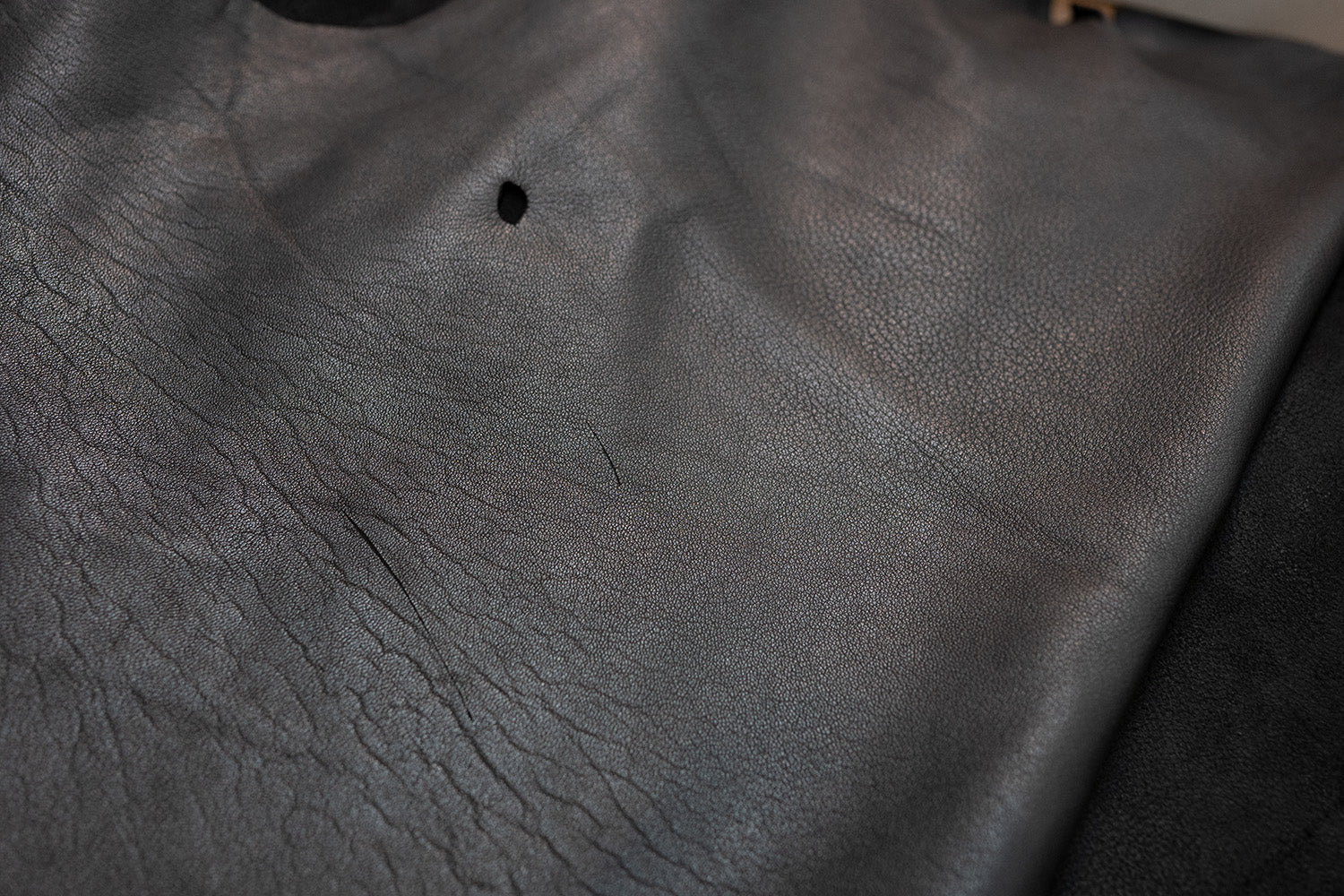
"I want people to know that because it was a living animal, it's natural for it to have individuality."
Such leather for meat retains "evidence of life" in the form of wrinkles and abrasions. Of course, it's possible to apply pigment to the surface during processing to hide these imperfections, but Enami deliberately advocates for "aniline finishing," stating, "We minimize the use of chemicals such as colorants and finishing agents after dyeing the leather, preserving the leather's original character."
This is consistently a declaration of his stance as a leather handler, and his pride as a tanner in continuing to operate in the future society. And that, I felt, is the origin of Setouchi Leather.
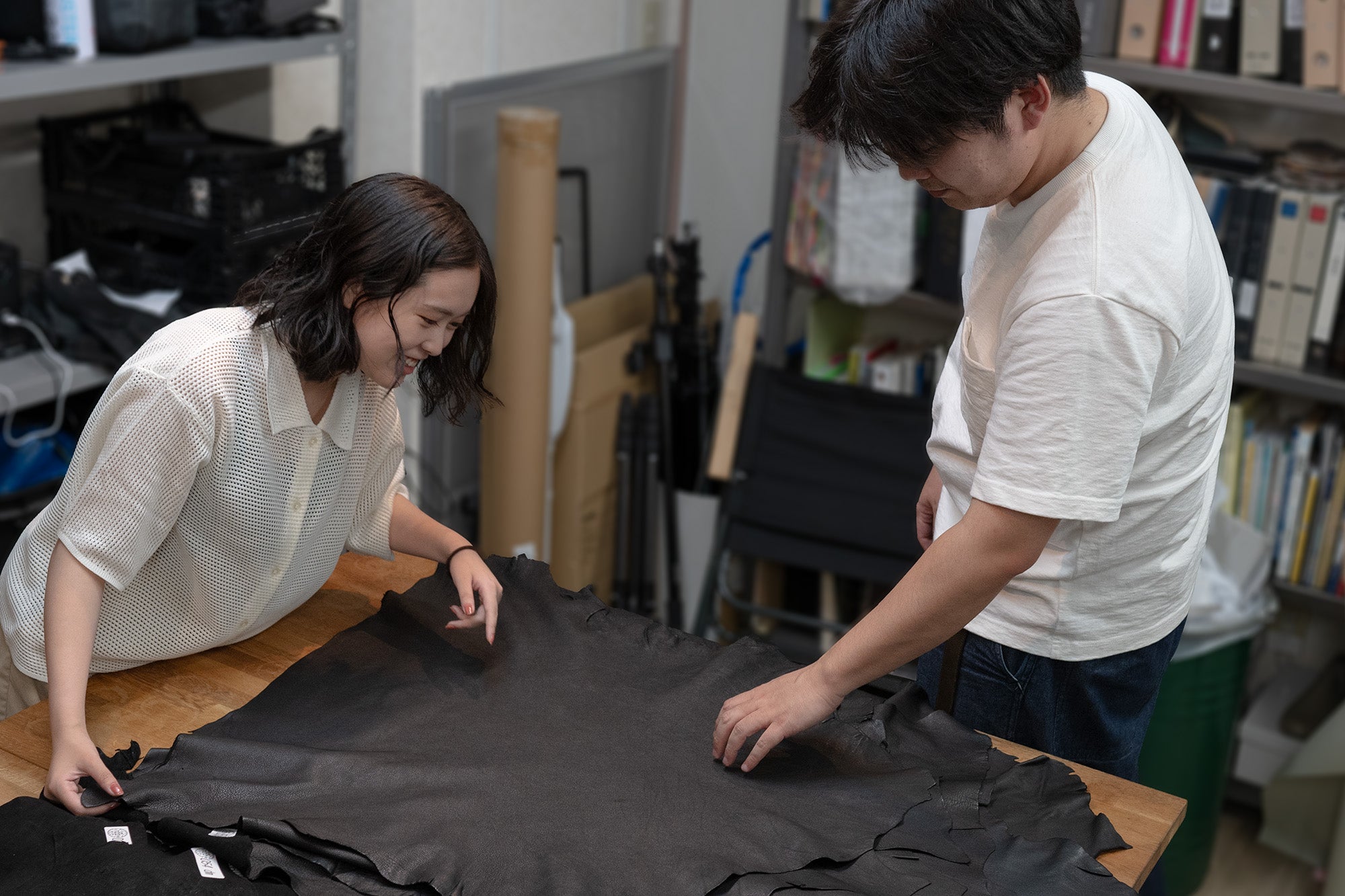
Misleading Place-of-Origin Labeling: A Breach of Manufacturing Principles
"If we're making it in Setouchi, I think the leather should also be from Setouchi."
Setouchi Leather's manufacturing philosophy is influenced by his previous experience at a leather glove factory.
In his previous role at the factory, raw hides originating from Italy were sometimes processed in another country and then sold in Japan as "Italian leather." This discrepancy between the stated origin and the reality caused him considerable discomfort.
It was then that Enami became aware of "traceability."
- Traceability: A system that allows one to track the flow of materials, from where the raw hide originated, where it was tanned, to where it became a product. It allows businesses and consumers to "know where the product they have came from (i.e., to trace its history)."
"It's easier to tell the story and see the human faces involved when leather made in the Setouchi region is processed and turned into a product in Setouchi. I want to engage in activities that connect people through leather."
That is why Enami entrusts the sewing to glove artisans in Higashikagawa City, Kagawa Prefecture. He wants to create something that can truly be called "Made in Setouchi." He emphasizes that knowing the names of everyone involved, from the leather to the product and its sale, is crucial because of this consistent commitment to transparency.
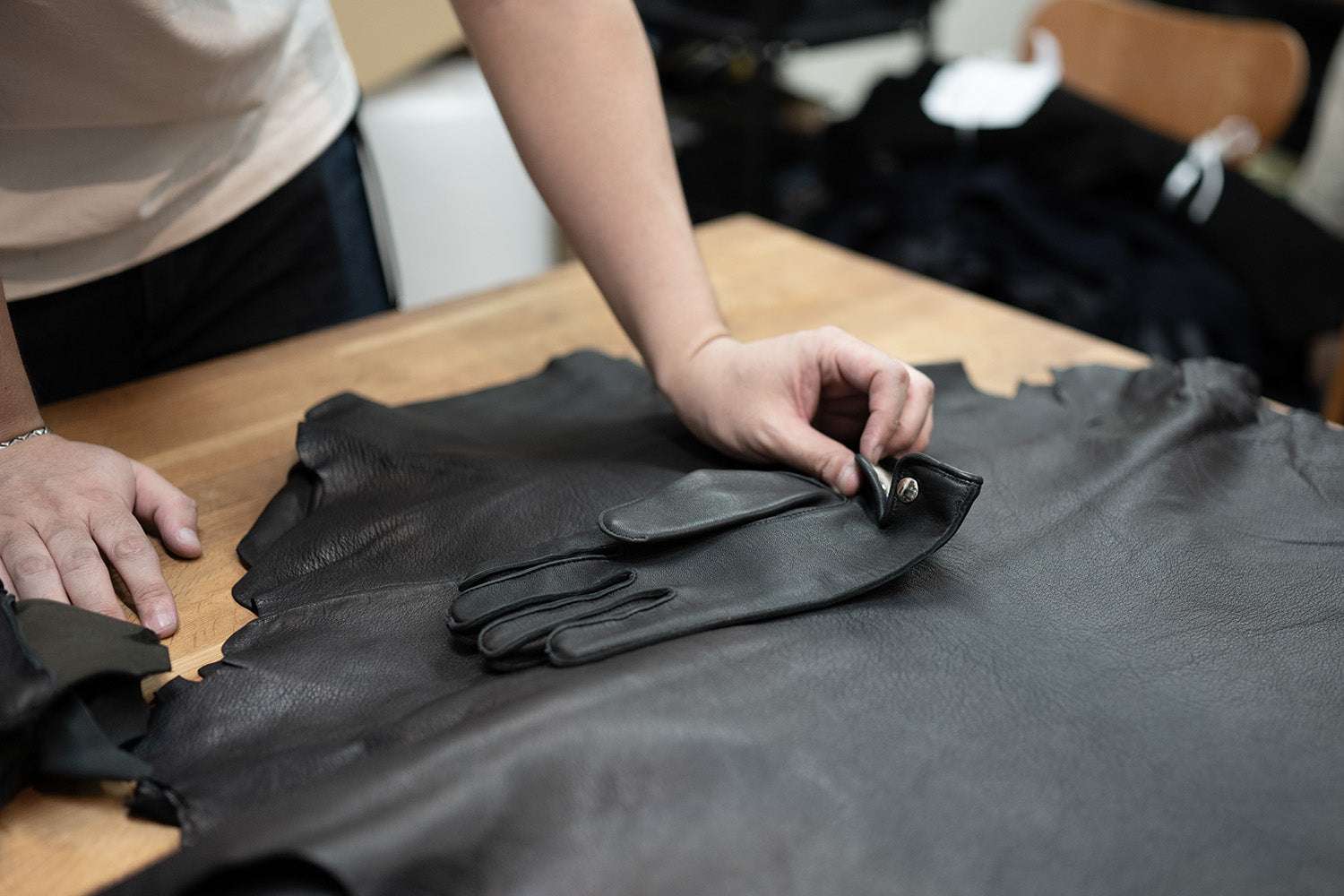
"Ideally, I'd like to be able to say, 'Produced by Mr./Ms. [Name].' You know how movie credits show the production staff and companies involved, right? I wish it were the same for products, so you could see who was involved. It's difficult in reality due to various issues, though (laughs)."
This desire for "visible craftsmanship" is reflected in Setouchi Leather's products. Enami's belief is in transparency, the sustainability of the leather used, and minimizing waste. Leather born and raised in the Setouchi region. The beliefs embedded in it become gloves, each pair with slight differences in expression, passed down to our hands.
So that when you pick up the gloves, you can feel the human emotions behind them.
"Washable" leather gloves
Many people ask, "Can I really wash this?" or "Isn't it sensitive to water?"
When we posed this question to Enami, we received a surprising answer. Apparently, in the world of sports, "washable leather" has been commonplace for 20 to 30 years. Golf and baseball gloves inevitably get sweaty and smelly, so being washable is a mandatory requirement. On the other hand, it's still largely unknown in the business and fashion sectors, making it a new value proposition. However, Enami states that "color fading" remains an eternal challenge. Leather is highly susceptible to moisture and friction, and color changes are also prone to occur depending on sweat components and the usage environment.
"It's strange, isn't it? With denim, color fading is welcomed as character, but with leather, it's considered a flaw."
Nevertheless, they continued to pursue washable leather, experimenting with tanning processes and thickness, and even conducting washing machine tests.
"With synthetic leather, the day you buy it is 100 points. But from then on, it's a deduction system. With genuine leather, however, the day you buy it is 100 points. Depending on how you care for it, it can become 150 or even 200 points."
In other words, genuine leather is a "plus-point material." WONDER BAGGAGE's washable leather gloves combine this appeal with the "washable" feature.
What is good leather?
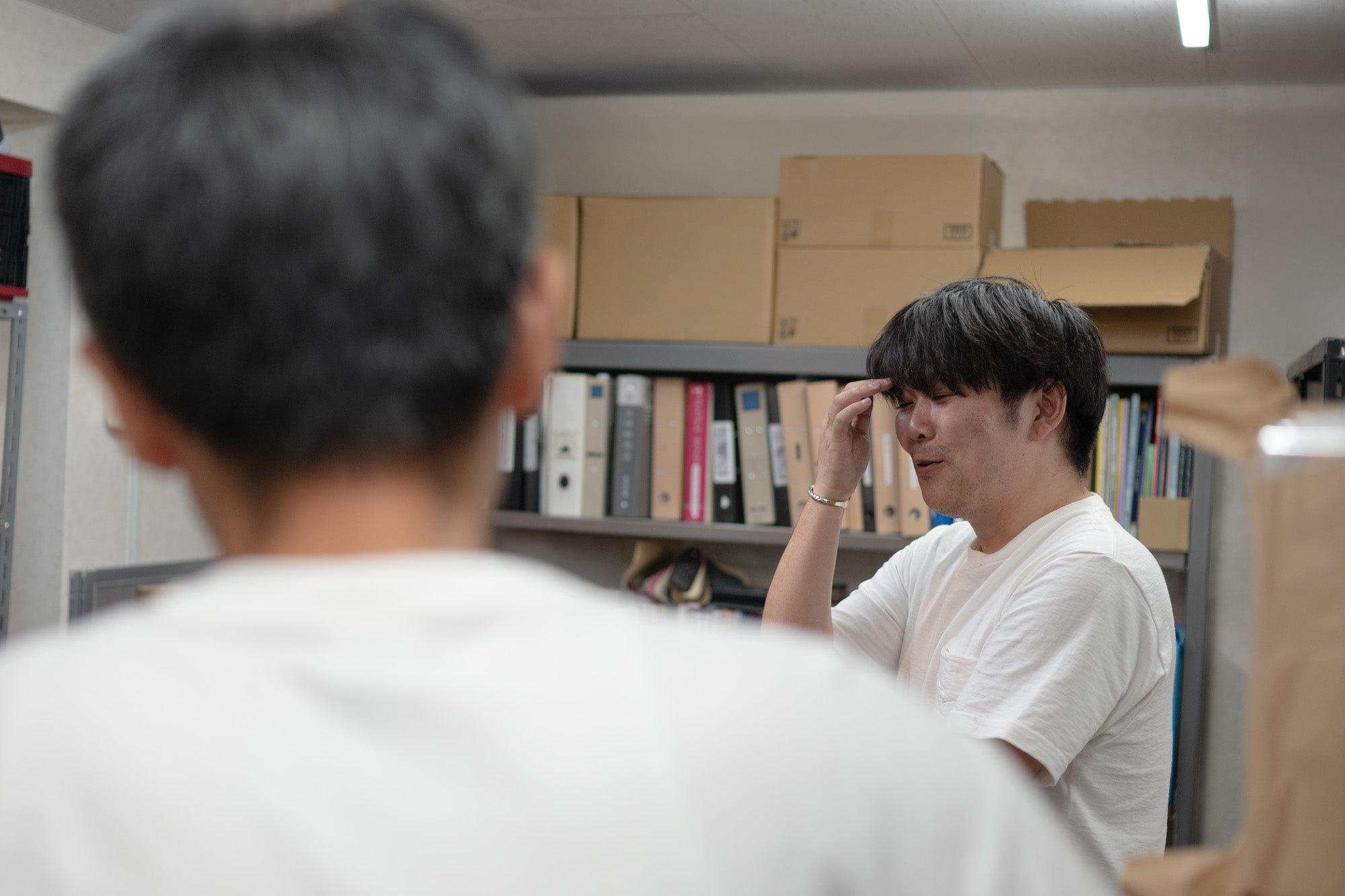
Finally, when asked "What makes good leather?" Enami answered, a little bashfully,
"It's the leather that I truly love."
It was the feel of the horsehide Inoue had made when he first touched it, back when he was starting the company.
Enami fell in love with that single piece, bought it for himself, and keeps it at home.
Even now, that leather continues to be the standard for Enami's craftsmanship.
Craftsmanship that begins with the pure emotion of "I love it."
That spirit is certainly alive in WONDER BAGGAGE's washable leather gloves. We hope you will pick up and use the gloves born from this approach every day.
Washable leather gloves
Washable leather gloves
About leather
Leather is characterized by retaining traces of scars, wrinkles, blood vessels, and pores that were present on the skin. In particular, the leather used in this glove has been finished to be as natural as possible, so these characteristics appear as unique features. Please understand that minor scratches, wrinkles, and grain patterns are natural characteristics of the leather.

Gift box
Delivered in a dedicated box, perfect for gifts and presents.
Free Gift Wrapping WONDER BAGGAGE Official Online Store offers free gift wrapping. If you would like this service, please select it on the purchase screen. *Please note that this is a simple complimentary wrapping service.
what i've seen so far
Travel through society.
